| Selected and Arranged by Rakesh Rampertab |
This is Not an Essay. This is a selction of images, articles, et cetera to highlight the political and racial violence which has plagued Guyana since the 2001 General Elections, particulary the rise of black militancy coupled with criminality to overthrow the government, and the arrival of the death squads or "phantom" to counter this armed resistance emanating out of though not necessarily from Buxton. This electronic scrap book is not to be used for any citation although official, real documents etc cetera quoted herein can and should be used by writers and researchers where appropriate. The editor welcomes any image from the public which they think should be added here. Please send to rrampert@yahoo.com. Enjoy. Prelude to 2001
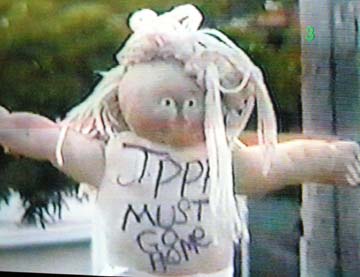
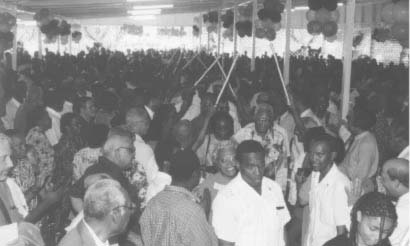
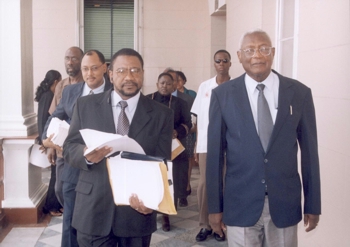
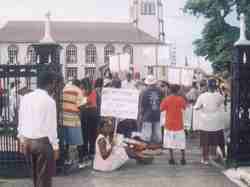
Left: "Wuk pon she! Wuk pon she!" as chanted by those who created this 1997 effigy (photo, voodoo doll) of Janet Jagan, tossing it into the air as a pseudo-voodoo ceremony is conducted outside the High Court, with one wish: that the court rejects Janet Jagan/PPP as the legitimate winner of the 1997 general elections. Right, the 2000 PNC Congress; Desmond Hoyte, the Party Leader arrives. This is the final Congress before the 2001 general elections is contested. PART ONE: THE 2001 ELECTIONS, PNC STREET VIOLENCE, PPP SELL OUT AND WHAT "PEACE"?
In the meantime, the media is filled with what Stabroek News (SN) in an editorail called "Preachers of Hate." Here is an extract; "Consistently advocating hatred on television for one ethnic group on the basis that some of its members are personally biased against the other group, some are well off (the majority are not) and some indulge in discriminatory employment practices is by any reckoning an extremely dangerous practice, and is bound to lead to serious trouble. Indeed, it has in the opinion of many experienced observers already done so by contributing to the extreme hostility shown since the March election and a continuation can only make things worse." (see March 22, 2001 SN editorial) On March 21, Mr. Haslyn Parris, a senior PNC figure, admits publicly that the result is good. He is mobbed and assaulted by PNC supporters inside PNC HQ, Congress Place, and has to be saved by Hoyte who intervened.On March 23rd, in the height of disturbances, Franklin Thomas and Oswald Fraser, two Black PPP members are abducted and taken by PNC supporters to PNC HQ, Congress Place, where they're held captive and beaten with ticks. There is no official apology or statement on this by the PNC.
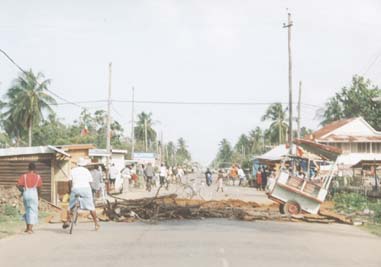
Outside of the city, especially on the East Coast, Indians became open for easy attacks from Black men and women. For example, on April 12 at 6am, Ms. Bibi Nazmoon Khan is assualted by three individuals, includng a Black woman. They chased off her husband and stripped the woman, leaving her naked in her home. On April 18th, while the funeral of Mrs. McKinnon is in process in Golden Grove, a minibus carrying passengers from the airport (a family from overseas including a 10-yr-old girl) is made to stop. The child is chopped on her thigh and a failed kidnap effort is attempted attempt. On April 23, a bus is stopped as it passes through Buxton and channa-bombs are thrown into it. A number of people are burned; Ms. Dhanwattie Phagoo of Enmore jumped through a window, her head on fire. She is chased down the road. Above, "Position of strength": PNC Buxton supporters on the road. Below, B. Barran and D. Jagdeo, executed to provoke race war.
Left, the Barran family after the double-tragedy; right, GIHA's Rhyaan Shah, ROAR's Ravi Dev, and the PPP-TUF's Manzoor Nadir at the funerals.
Left,
PNC (Hoyte, Corbin, Trotman, etc.) leaves the National Assembly;
right, PNC supporters protest outside parliament. On May 28, a police vehicle is ambushed at Coldingen. One cop, Sherwin Alleyne, dies. On June 15, 2001, the PNC walks out (photo, top) of parliament in protest of Doodnauth Singh being Attorney General. Then on June 21, Mr. Hoyte refuses to associate the PNC's elections slogan of "Slow Fire" with the tone of anti-government demonstrations and violence perpretrated against Indians on the East Coast, as a Stabroek News editorial ("Fire") opined. According to Mr. Hoyte: "The People's National Congress Reform adopted the slogan 'slow fire' during the last elections campaign. Obviously, with an intent to mislead you have misdescribed it as "slow fire/more fire", twisting the slogan...If the slogan 'slow fire' upsets you, so be it: it remains. The Party rejects the hypocrisy inherent in your claim that the slogan may possibly have 'inspired some of the fiery mayhem that the country has witnessed since March19th.'"(see Stabroek News, June 21, 2001.)
On Friday last (June 29, 2001), the Commissioner
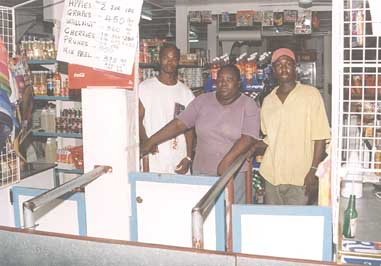
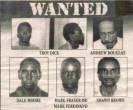
of Police issued a press release which ARRIVAL OF THE ESCAPEES-Taliban On Mashramani Day in 2002, while the country supposedly is in a festive spirit, a plan by the Black extremists is staged; five hardcore criminal (Shawn Brown, Dale Moore, Andrew Douglas, Troy Dick, and Mark Fraser) escaped, killing one prisoner officer (Troy Williams, shot by Shawn Brown) and severly njuring another (Roxanne Winfield). According to an ex-Black Clothes officer, a "prominent lawyer" faciliated getting a gun to the escapees in prison (see KN June 2005). On February 28, the escapees staged their first attack: on the Parsaram store in Annandale.
Prison officers; Roxanne Winfiel, injured and Troy Willaims, killed. Right, the very first attack by the escapees: Vivekanand Parasram and his shop staff in Annandale. It is not true that the PNC is behind this jailbreak. What is true is that the immediate crime blitz that followed, helped to further destabalize Guyana in the interest of the PNC. Buxton, the home of Andrew Douglas, became the staging ground and hideaway haven for the gunmen. By March 2002, relations between the PNC and PPP strained so much that the PNC, always in control, called for a "pause." It acused the government of going-slow on certain agreements. With diplomacy faltered, this only left the country vulnerable for the wreck that the extremists-criminals would create.
On April 2, the head of the Police Target Special Squad (aka "Black Clothes"), Superintendant Leon Fraser, is killed when gunmen in a car at the Linden/Soekdyke Highway opened fire as he approached the vehicle. The gunmen (Shawn Brown and Compton Cambridge included) then fled into the jungle. The police was lured there; it was never intended to be a gunfight, only a trap to kill Fraser, who was an enforcer for a US embassy officer that sold visas to locals, and an imprtant part of a squad accused of extra-judicial killings of primarily Black men. This is an extract from a Stabroek News (4/08/2002) editorial; "His death and that of Shaka Blair at the hands of the police in Buxton on Saturday have again ignited the burning controversy of extra-judicial killings. When Fraser died there was a sense of dread that the police would respond in kind and the circumstances of Blair's killing have added further weight to those fears. It can become a never-ending cycle of deathly violence if not reined in. The government and the police force cannot be oblivious to the wealth of evidence that extra-judicial killings are occurring with impunity." . Months later, a letter titled 'Who Killed Supt
Leon Fraser" appeared from ex-PNC foreign minister, Mr. Rashleigh
E. Jackson; "
It was good to read that the police were able to gain possession
of caches of arms stashed in safe houses and more recently in
a pick-up seized as a result of a vigilant army patrol. I note
that the police were able to connect a number of the weapons with
crimes committed, including murders. What I would like to know
is whether among those guns was the one which was used in the
murder of Senior Superintendent Leon Fraser. If not, are the police
still searching for that gun and the murderer?" (See SN 12/21/2002).
The Handbills Circulated at Funerals At the funeral for Mr. Blair which was organized by the PNC, the first (titled "Shaka Lives") of a series of handbills proclaiming the need for violence, the strenghth of Blacks in resistance, and capitalic endeavors of Indians (and Portuguese), was handed out. In "Shaka Lives" the signature of the handbill reads "the Five Freedom Fighters,"referring to the 5 escapees who were present at the funeral. It was not the work of the escapees or the people of Buxton; it was the work of the "masterminds" that reside outside of Buxton. This handbill attempted to do two things; first, it apologised for the death and wounding of the Black prison officers on Mash day; secondly, it announced the escapees as liberators of the Afro-Guyanese "nation" just as sea bandits (Sir Walter Raleigh, Sir Francis Drake and Sir Henry Morgan), all men with noteriety, did for England. It is interesting that White men (sometimes considered as synonymous to slave masters) were being heralded and not, say, the legendary African Zulu leader, Shaka. (For an actual handbill, see the "Andrew Douglas, Hero"Handbill) People will be "killed, kidnapped and burnt to death, no remorse nor tolerance" will be shown for those who align with the police." —FIVE FOR FREEDOM handbill whcihw as sent to numerous PPP officials.
On May 11, the extremists decided on another fatal order. Six gunmen (included Compton Cambdridge) invaded and killed Ramdeo and Mahadai (Sita) Persaud (photos, below), shopowners in Annandale. There were executed. Their deaths would be just two of many to occur amongst business people, simultaneosuly acquiring money to finance the extremists' fight against the government and, secondly, to provoke a respose from the Indian community. Sita and Ramdeo Persaud, executed by the 'excapees' to stir Indian respose or civil war on race lines On May 30, the fight against law-enforcement officials was taken to a new level when at least two carloads of gunmen sprayed the Alberttown Police Station with bullets. One policeman (Andy Atwell) died and numeroius injured. Across Georgetown and East Coast especially, police stations began to secure themselves; gate were padlocked and guard rails erected. Vigilance police station is another to be sprayed with machine guns. However, on June 6th, the police, acted on a tip-off, confronted the dangerous Compton Cambridge in Nabacalis. He is killed in a shootout.
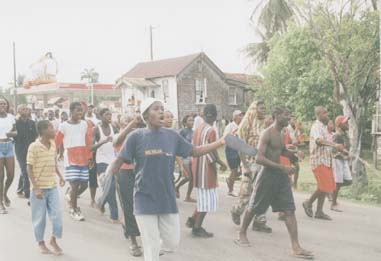
By July, Guyana was under the throes of the militants-criminals. The PNC still did not attempt to curtain the level of violence; the government seemed weaker with each passing day. On July 3rd, a march was organized by a group of people from the upper East Coast to the city. It ended before the Office of the President. The march was organized on this date when CARICOM heads of state were in Georgetown attending their their 23rd Meeting. Storming of the Office of the President
In its statement supporting Bynoe, the PNC/R said that Bynoe was singled out as leader of the processions and that the ruling PPP/C "and its propaganda machinery have been attempting to distort the events which transpired that day to suggest that it was more than an illegal demonstration which got out of control." “Mr Bynoe is a public figure. He served for several years as a Member of Parliament of this country and has served and continues to serve in several prominent national organisations. He has also recently re-established his membership of the People’s National Congress REFORM."—The PNC on Bynoe, July 8, 2002. To "depose"
the Government
Left , Raphael Trotman in 1997
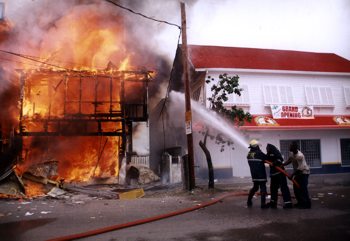
. Below, stormers being arrested. Top left, a car is overturned and set ablaze; right, one of the Regent Street stores (Payless) is set alight
Two Comments on July 3: Thinking places insulated from political interference? "Guyana is a social powder-keg. It is a veritable charnel house of the skeletons of persistent poverty, juxtaposed with the rampaging material aspirations of a society force-fed with the consumer adverts of daily television and newspapers. For too many of the ordinary fold, their attention is circumscribed by the neighbourhood of their material miseries; and the traditional political parties do not routinely, conceptually or physically, reside in that neighbourhood. Privileged people don’t march and protest; their world is safe and clean and governed by the selective application of laws designed to keep them happy. It appears to me that the key lies in finding
‘Thinking Places’ insulated from the heavy hand of
political interference, or concerns about the likely political
fortunes of any individual political faction. In any such thinking
place no government can interpret its electoral mandate as one
that means: “Shut your mouth and let me decide. Anything
you suggest must be suspect since you only want to get me out
of Government!” In such thinking places, the exploration
of dialogue can revisit the concept of Central Government being
synonymous with Central Authority that could ignore the transparency
of consultation in decision making. In such thinking places, there
can be a paramountcy of consultation protocols in matters of direct
importance to ordinary folk."—Haslyn
Parris, commenting on July 7, 2002. As an old soldier whose life, along with those of my many comrades in arms, had been placed on the line for over three decades, in what we proudly and patriotically considered to be SERVICE to our country, and who as Chairman of the Elections Commission for the 2001 General and Regional Elections, saw at first hand the 'hodge podge' approach by the highest forum of this land to the planning and streamlining of the democratic process called national and regional elections, I also appeal to leaders in civil society who have a voice to speak up, speak out and ensure that our elected representatives at every level, listen attentively, act decisively, and implement impartially, those measures designed to turn us away from the brink and to navigate a course that is truly in the interest of Guyana and all Guyanese."—Major General (retd) Joseph G. Singh, July 5, 2002. See his Drawing the Line The Benschop and Waddell Factors
The incarceration of Benschop may have been the culmination of many things; the Buxton extremists program, and the caustic statements on TV included. below is a list of controversial sayings Mr. Benschop has been accused of saying by th Stabroek News (see SN 11/30/2002). Dear
Editor, There is a rumor that the PPP may release Benschop from prison in 2006 if they feel they need someone to stir things up, to scare Indians into voting PPP.
____________________________ On July 10th, the two PNC supporters who were killed are buried. The very next day, Adrian London, a policeman who helped to restore order at the OP, and who was threatened, and who was the one to bring back Andrew Douglas from Surinam in 2000 to stand trial, was killed. He was targeted by three of the deadliest of crimianls; Shawn Gittens, Romel Reman, and Kwame Pindleton. London was also the policeman one who arrested Romel Reman for the murder of cambio dealer Neville Sarjoo a few years before. The message was very clear from the extremist-criminal quarter. And this, incredibly, was well-supported by the language and ideology of the PNC regarding the use of violence against Indians.
PPP CONGRESS 2002 at Rose Hall Overshadowed by Escapees "Mission" As if there was not enough violence, the gunmen decided to assert themselves by showing all that they could get to the government any time. For this, the descended on Rose Hall, where the PPP was keeping its congress. According to Dr. Luncheon, "Our intelligence did not provide us with the merest inkling that an outrage of such a magnitude was being planned and was going to take place at that time...We must concede that we are dealing with a fairly well organised, well-oiled machinery led by people with some skills" (see July 25, Chronicle).
Top left, police outpost where there were no fire arms. Middle, spot where unarmed policeman Pardat was taken and EXECUTED. The gunmen including the escapees were making an extraordinary point. With a rabid atmosphere defined by violence, the PPP was not in control of Guyana. This was very evident when it approached its Congress on July 20th, in Berbice.Despite the theme of the Congress, "Defend Democracy: Build on our Successes," inside the PPP, the argument between the reformist Section K Cambelville group (led by Khemraj Ramjattan) and the die-hard Marxists Leninist (led by Janet jagan) over possible changes in the PPP constitution, to reduce its strong imprint of democratic centralism and Marxist-Leninism in favor of more democracy, got no attention except that they, the PPP, voted against changes. They did not want to "Balkanize" the party or the country. Ramjattan was not given a chance to present his views to the delegates there. Before it ever started, the entire congress seemed a farce. Yet, Clement Rohee had this to say; "People never rejected us because of what we stood for. People accepted us for what we stood for, and the collective wisdom of the delegates of Congress... they said that we should continue in this vein. Everything was done in an open and democratic manner.”—(see SN 7/25/2002) While the PPP were occupied, more than a dozen
gunmen (most likely Kwame Pindleton, Shawn Gittens, Romen Reman,
Dale Moore, Shawn Brown, Andrew Douglas, Leroy Lowe, Mark Phillips,
Akeem Hack [Chip Teeth], and Melroy Goodman) travelled to Rose
Hall and spent two hours unchallenged, robbing and executing in
the grandest show of criminal revolt. The PPP party was very lucky
that day; for it has been said that two fishermen gave the wrong
direction to the gunmen, leading them away from the Chandisingh
High School where the Congress fete was in progress. When the
gunmen were through, nevertheless, two policemen were executed,
one PPP youth member (Kandhai) was killed, and an old villager
died of heart attack from the effects of the barrage. Yet, PPP
General Secretary, Donald Ramotar, was brazen enough to declare
the congress a "success." Violence and Crime Blitz by Escapees—Attack on Chester Homes After the PPP Congress in July 2002, Guyana was stalled. It was obvious that an armed struggle was being waged. Business was slow, the PNC kept silent about crime, and across the East Coast, villagers turned in early and changed their lifestyle as a result of the daily attacks. It seemed as if an intension to overthrow the government or at the least, to destabalise the coutry to abreaking point, was about to materialized. Police became a prime target; police stations began to padlock their gates and erect sandbags. Their vehicles were ambushed and shot at. Meanwhile, the PNC resisted all calls for the army to become a crime-fighting unit. They said the constitution did not allow for it, not to mention soldiers not being trained for this. Soldiers, though they were jungle-trained, would have problems running through cane fields and scrambling through trenches!
Crime simply went on, but it became less political and more personal and entertaining. On July 25th, gunmen Kweme Pindleton and Leroy Lowe are cornered and killed by the police at UG road. Shawn Gittens managed to escape. Anita Singh and hair cut off by a Black bandit with a knife, because as he said, he didn't like "her kind of people" (Indians).
On August 7, the family of Edris Chester (photo, below) is attacked in a very heinous manner; the two homes are torced and as those inside attempted to leave, they are shot at by gunmen from outside. Her son (Brian) and daughter-in-law (Diane Glasgow) were already targeted by gunmen on April 26. They survived, though he was injured. The Chester family was attacked becasue it refused to work in tandem with the gunmen and spoke out against criminal attacks. The gunmen accused her of being a police "informer." After the fires, almost a dozen family members went into hiding.
The remains of the Chester homes, properties after being torched in August 2002 by gunmen. Right, Edris Chester. "I
too rushed to the door...it was a life and death (situation) and
when I looked out at the stairway to go down the step, that too
was on fire. So I rushed back and went into my bedroom and I went
under my bed and started praying and studying what to do with
my four-year-old grandson who was asleep in the bed." —Edris
Chester, see Chronicle, August 8, 2002 Death of Andrew Douglas and Annandale Under Siege
Douglas was buried in Buxton. Before the official ceremony, the body was taken to the "Gulf" aback Buxton where it was viewed by selected people, draped with the national flag, and sent to the church.
On August 27th, a number of Non Pariel families come under attack by a gang of at least 10 armed man, some of whom were very young criminals. The group included notorious criminals "Inspector Gadget" (Premkumar Sukraj) and Melroy Goodman, both rapists. At least two young women were raped, and an old man (Haroon Rasheed) who was keeping wake for his dead wife, was doused with gasolene, and set afire. He became blind and died one week later. Left,
Premkumar Sukraj aka "Inspector Gadget."
Right, house of Haroon Rasheed where he was keeping wake for his
wife.
The
Threat of Travel: Two men are killed
by gunfire as they pass through Buxton on their way back to Berbice,
having dropped off a relative tp the airport. Driver,
DEAD, is slumbed at the front seat. Vigilance Police Station has One Telephone! "
The lone telephone line at the Vigilance Station, too, 'is perpetually
engaged,' another senior rank stated in annoyance yesterday. But
his colleague pointed out: 'What people must appreciate is that
Vigilance [Police Station] is very busy at this time, because
it [is] close to Buxton...[There are] lots of activities and they
[policemen] got work to do. The men got to investigate cases,
make calls to get statements, we got to work, so I wouldn't deny
that the line is always busy.'"
Kamal Seebarran, kidnapped, released after paying 17M ransom. He was the first busnessman kidnapped.
Right, Patrick Rambarran, owner of Patsan Trading Services (store) on Vlissengen Road.
Above,
Kamaldeo Ganesh, kidnapped, allegedly sodomised, turtured, and
killed in Buxton. His wife was given 15 mintues to come up with
ransom money.
"He (jagdeo) is offering you bullets!"—Hoyte in speech to Buxtonians, October 2002 Before we get to Brama, it is important to mention that PNC leader, Mr. Hoyte went into Buxton on October 10, and gave a controversial speech. First, Hoyte, who was being seen by a small section of the Black community as too soft on the PPP, had to reaffirm himself. In fact, some Buxtonians booed the leader upon his arrrival there. In his speech, he did the unthinkable; he denied that Buxton harbored criminals any differnt from the rest of Guyana. Instead, he blessed the actions of the gunmen by saying that their action was part of a "just cause." Here is an extract from his speech, in whihc he said the PNC was in solidarity with Buxton because: "...Today it is fashionable for some idiots to say that Buxton is a criminal village. Buxtonians are criminals, Buxtonians are violent people.....The People's National Congress and I reject this gross defamation of the character of the people of Buxton/Friendship." You ask for bread and Jagdeo offers you lead! You look around is he offering you employment? Is he offering you education and training? Is he offering you jobs? He is offering you bullets!...The government has been using the notorious black clothes police to carry out their nefarious objectives. People with names like `Robo Cop', `Gangster', `Golden Gun', `Toots', `Bald Head', `Baby Face'...... You don't expect policemen... to have those nicknames. You expect the criminals to have those names, and the very fact that they have attracted those synonyms to themselves tells you about the character of these people... "The informer was having a great joke at the expense of the security forces. But be careful when somebody mounts `Operation Death', it wouldn't be your death because as I said you cannot be destroyed.......... guns and force cannot pacify Buxton....there is crime throughout this country, and crime cannot be limited to Buxton." "Our ancestors left us at Buxton a glorious legacy, it is a legacy of the triumphs of the human spirit over adversities, it is a legacy of service, it is a legacy of success" The PPP is seen as the "new oppressors" to which he said: "...you will resist them. You have always resisted the oppressors, you have resisted them today you have resisted them in the past and you will resist them in the future." "It doesn't matter who writes long letters in the newspapers, it doesn't matter who writes long editorials.., those people can't even find Buxton on the map but they want to analyse your problems and make prescriptions and the prescriptions usually are as follows, pacify Buxton, send in soldiers and police to kill all of you."—Desmond Hoyte, October 10, in Buxton The very week that people searched for Ganesh's body, Keishar's owner, Bramanand Nandalall (aka Brama), is chased down Regent and Camp Streets by a carload of gunmen that included the remaining escapees. Nandalall responded with his handgun but is eventually kidnapped. Apparently, he was shot in one of his feet during the melee. By October 27, with Nandalall kidnapped and kept in a "safe house" in the city, the gunmen seemed in control. This kidnapping was the premier talk in the Indian community in Guyana and overseas. And, interstingly, it became most obvious as with all things in Guyana, a question of race. It is not true that Blacks did not want Nandalall freed; many Blacks recognised the danger of the gunmen and how steadily Guyana was descending towards chaos. Many were simply tired of what was happeneing, and recognised that it was blunt wrong. Yet, this is not to say that there was not a strong sense of unofficial support for the gunmen from others out of sheer despise for the PPP.s of Guyana's society. Much of what happened to Nandalall as he was kept captive has been speculated upon. But on this weekend, trained killers entered into Guyana. Men who had already gathered adn studied information not only on the criminal network but aboout the very city and some East Coast villages. On this weekend, the criminal-extremist group inside and outside of Buxton made a fatal error; they assumed, given how quickly they had dominated the landscape via ciminal activities, that their program was being granted a major boost. Instead of eliminating Nandalall, they assumed negiotations with the businessman would result in more finance. Further, October 27 was Dale Moore's birthday and to celebrate, he entered Buxton and smoked marijuiana etc. The "masterminds" outside of Buxton could not stop this, partially because it was just impossible...and given the capture of Brama, they may have thought all was fine. But this was a fatal error of the entire campaign—possibly the most fatal apart from actually having such a campaign. By the time Moore arrived back into the city early next day, death was marked for many of the players in the kidnapping. Nandalall managed to free himself. He escaped. Trained marksmen from overseas were already inside Guyana ready to retaliate. Six gunmen would be killed including Dale Moore and Mark Fraser, two prison escapees. But it was more than the deaths that bothered people, especially those who approved of the criminals, even silently. It was obvious that marksmen, imports, were involved. People speculated, naturally. And people believed. Two other accomplices are killed, one who was with Dale Moore (McPherson); the other (Delon Nelson) was found in front of the "safe house" yard. Moore and another man are killed in Lamaha Gardens;
Toney Singh is executed and his body is found in Le Repentir
cememtery. Most likely he was killed and dropped there, still
wearing his bulletproof vest etc. Lancelot Roach (son of a senior
policeman who's in charge of communications with the Guyana Police)
and Mark Fraser executed by snipers in Annandale road. PHH 7248
Rocah car. Frank Solomon (ex cop)
shot in Annandale market road as gunmen tried to carjack his vehicle.
He died in the hospital.
Left: Green car: Two bodies shot by marskmen, snipers; right is Mark Fraser, escapee. His head is drawn back. Driving on left hand is Roach who is slumped over on Fraser. At least 16 bullets were fired on the windshield. More to other parts of the vehicle. A young lady, Candace Lowe, who was in the back seat escaped unharmed. Right: white car: this was used by at least three mysterious gunmen who claimed they were police. According to the police, the dead men had in their possession, two assault rifles - an AK-47 and one M70, one `Mosberg’ 12-gauge shotgun with a screw-on rack to store ammunition, 310 rounds of 7.62 x 39 ammunition, 25 12-gauge cartridges, 11 magazines for the rifles, one pair Bushnel night vision goggles, a cellular phone, a pair of handcuffs, a GDF camouflage shirt, two pairs of sneakers, one pair of slippers, two wigs, a tub in which the ammunition was stored, a quantity of clothing, a Holy Bible and a syringe with needle. (See list)
Arms and Books—the Letal Combination: Molotov cocktails and/or channa bombs, magazines, are some of the finds. Books used to teach the gunmen about Black resistance etc., and a sense of a Black god, are The Antichrist 666, the Illumanati 666 (Vol 1), a book on Marcus Garvey, and the Holy Bible. This would have been read from a perspective that creation began in Africa, and that whatever was missing in the King James version, would ahve been touched upon in the Illumanti 666. ________________________________________________________ The Phantoms Step up
the Killings—Kills many including Inspector Gadget:
On Diwali night (Nov 4), the phantom opened fire and killed 5 men in the city; Otheneil Embrack, Derrick Torrington, Andrew McPherson, Basdeo Dyal, and Oliver Springer. of Sophia. On November 6, Amernauth Meerah is shot several times by unknown gunmen on the East Coast Public Road. He survived after jumping into a trench…and later goes to TT for medical treatment. On November 12, Randolph Chapman called `Super Cat’ was discovered dead on Company Road, Buxton. Most likely killed by the phantom.
Above, Private Ryan Thompson of teh GDF, shot in Buxton. On November 28, the police catches up with Romel
Reman in Subryanville home, but he managed to escape. He
and a partner had just committed a robbery and his partner was
injured; the partner died. As expected, the gunmen strike back.
On December 3, as the X-mas season started, a gang of some 12-15
gunmen (most are teens, a new tier of gunmen) carried out large-scale
robbery on Regent Street stores. This gang included, most likely,
rapist-gunman Mark Gittens, escapee Shawn Brown, Mark Phillips
(aka Big Batty Mark), Adrain Green, and Charles Grant (Piggy Mouth).
Constable Quincy James was gunned
down as he marshalled traffic unarmed at the junction.
He was shot at least 10 times. He was 18 years old. The very nexy
day, with the youngest cop killed by gunmen, an army patrol breaches
its orders and goes beyond the Buxton patrol zone. It heads to
Good Hope and finds a bullet-proof vehicle and three men. This
is the first time that the public comes face to face with a phantom
squad. This was not, of course, the only squad.
The Good Hope Trio, Yohance Douglas, and Children Who Protested against the Army The three men are: Shaheed Khan (aka Roger Khan), Haroon Gahya, and policeman, Sean Belfield. The vehicle they were found with carried bullet-proof windows and inside was an arsenal of high-powered weapons, night-vision goggles and a laptop computer capable of intercepting cellular calls, placing locations of callers, and providing digitized maps of Georgetown and certain East Coast villages including Buxton. All there were subsequently freed of all charges later. Their lawyer argued that the men were not inside the vehicle at the time of arrest. After the Trio were arrested, they were taken to Camp Ayenganna and held. A major there tried to intervene for their release upon back-scene talks with a senior PPP official. The story gets hot, the PNC moves in. The Major is forced to resign or stand a possible court martial trial. He resigned. The senior PPP offical refuses to back him up, despite the promise. For more details on the Good Hope Trio, see page: The Good Hope Trio, Brama, and PNC Concerns On December 18, Heeraman Sahadeo, a carpenter of Mon Repos, was kidnapped during a visit to Buxton to collect wages. Kidnappers had demanded $5M. To date, he is still to be seen. Many believed he was killed and buried or his body burned. Over time, more deaths under mystery circumstances occur, while the eyes of the public tuned in to the Trio and their trial. Still, East Coast villages were still apprehensive. Then on March 1, 2003, Yohance Douglas, 17 yr-old UG student, is shot and killed by police after he and 3 other frineds are followed by a police vehicle, thinking that the four teens are wanted men. Ronson Grey, 19, was shot in his jaw, but survived. The crime raised, on again, the debate on police killings and young Black men being stereotyped by the police and the public. WAVE photo, Women Against Violencein in the Yohance Douglas march On March 19, 2003 two men on bicycle attempted to kidnap an 11-yr-old girl from the Stratsprey Primary School (photo below). They went into the schjool and snatched the girl who fought back and was eventually saved when a car approached, hitting one of the men. The driver converged on the men. eventually, they took off and headed into Buxton. After this, we see teh students carrying placard, protesting against both the governmnent and the army. In fact, the army was told to leave the vicinity of the village, because Indains felt the army merely stood by as crimes continued in in their naighborhoods.
“24
hour protection for children”, “Crime must come to
an end”, “Army must go, police must stay”, “No
children, no future”,
Brian Hamilton, proprietor of the Esso gas station at Buxton, killed. Right, the home of Shawn Brown's parents in Kitty is set on fire by rival gang members. On March 21, Brian Hamilton, owner of a gas station at Buxton, is gunned down by two men who then headed into the village. This happened despite his cordial relationship with the people of Buxton. By April 2003, only two escapees remains and one, Shawn Brown, the only one still visible, was having spats with other gunmen. One night, four bodies turned up on a road in Buxton. The home of Shawn Brown parents is torched in April.What brought him in what another kidnapping that simply should not have happened: Shawn Brown and otherskidnapped a US personnel, Steve Lesniak, from the Lusignan golk course. Lesniak is taken to Buxton and kept in the House of God for a while. He is later released after, some speculated, after relatives of the man responsible for security at the US Embassy, offered the ransom. Obviously, the US government has no policy of paying ransoms. Instead, on April 13, FBI and CIA opertaive travelled to Guyana. They are given full access to all police records compiled on the crime situation. It has been alleged that an ultimatum was handed to the Guyana government, the Opposition, and the security forces: deal with the problem of Buxton immediately. Meanwhile, inside Buxton, gang members fight amongst themselves. On April 23,: Shawn Gittens, known for his rapes and sexual assaults on women including Black women from Buxton, is killed by members of the "criminal hardcore subgroup." He had, apparently, assaulted a member of the group who was attached to the PLM, despite repeated warming to lay off the women in Buxton. He was shot in the chest, right temple, upper body, upper right arm, left cheek, and left and right ears.
The Guyana Human Rights Association (GHRA)along with the ACDA and the PNC/R questioned how all these men could have been killed; why not was captured? It was obvious, however, that capture was not on the minds of any police or soldier. Here is an extract from a press release by the GHRA: “Cleaning up the criminal situation in Buxton was never going to be easy. However, press reports on the shooting...raise serious questions about the intent and the methods employed in this operation. In particular, the fact that all six died - no one was wounded, no one gave themselves up and no one was arrested - is simply not credible. The impression given by the incident is that the joint operations intended to execute the six men.” —(See GHRA release, June 5, 2005).
Shawn Brown is on the move, he goes into the city to avoid Buxton. But the police is there. The next day, on June 5, Shawn Brown is killed along with his brother-in-law, Delon George, and Tony Singh (another T. Singh), are killed in a shoot-out with the army-police. He is the fourth of the five escapees to have been killed. The fifth, Troy Dick, may still be at large but most believed he may have done the sensible thing—leave Guyana. It is not too clear whether he was part of many of the criminal activites that involved the others. But the death of Shawn Brown brought the escapees-saga to, arguably, a conclusion. The Advent of anti-Hindu
Sentiments Yet, Kean Gibson did not start this view. It was given to her by a few Black intellectuals, ex-banking officials who believe that the PPP (despite its Marxist-socialist leanings) is headed by Hindus. It was gieven to her by people such as Clerence Ellis. Here is Mr. Ellis (and ex-PNC/R member Eric Phillips who left the PNC after the 2001 election) writing in "Power Sharing for Racial harmony"; "The Hindu religion justifies inequality. That makes equality of opportunity as an ideal between Hindus and non Hindus almost impossible. Some acculturation of the Hindu inequality / exclusivity thinking has taken place but it surfaces all the time in everyday activities and is partly responsible for the visceral reaction of African Guyanese to the prospect of a never ending perpetuation of PPP rule. Afro Guyanese know instinctively that such rule means dominance, and that for many Hindus, dominance of those perceived as subordinates is not unjust." For more on this book, see Kean Gibson's pamphlet, _______________________________
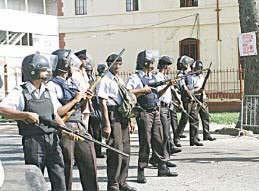
Police Under Siege by Militants-Gunmen: Photos
Statement by President Jagdeo on influx of guns: “There
are several sources of weaponry. We think that some may be coming
across borders, especially the Surinamese border. I had mentioned
this to the President of Suriname and he promised a collaboration,
but we have had collaboration between the two police forces...
We think some weapons may be coming in from the States, through
containers or barrels and there are other borders, but specifically
these two."
_______________________
George Bacchus: Once a Spy, Once an Informer
George Bacchus is more famous that Mickey Mouse
in Guyana. Or was. A classic shady character that was well known
in the underground world of the city, he gathered information
for the death squads—well, according to him. All we know
of him is based on his views. Eventually, when he found
death squad members become trigger happy, accepting money to kill
people for others, he wanted to disassocaite himself from the
group. He must have had run-ins with his previous friends and,
realising that they were after him, tried to lie low. Thing is,
they came one day and instead of killing him, the gunmen shot
and killed his brother Shafeek Bacchus. He was supposed to be
the primary witness in his brother's case, hoping to expose all
the works of the phantoms—but instead, seems to have problem
getting protection. He approaches the US Embassy and spoke to
them. He spoke also to the PNC Leader, Robert Corbin on June 11.
He has PNC-affiliated lawyer Basil Williams draw-up affadavits,
which he signed. (See Affadavits
of George Bachus to the PNC )
Bacchus gets tangled with the Home Affairs minister, Ronald Gajraj, whom he says at at the head of the plot, with chief hit man being Axel Williams, ex-policeman. The he changed his story, saying he snitched on Minister Gajrag becasue the ninister did not respond when Shafeek Bacchus was killed. So, he decides to take an offer proposed to him: make a tape saying you've misled the public and you'll get 10M and a safe passage out of Guyana. He makes the tape in his neighbor's home (PPP MP, Shirley Edwards), but it is not liked. He is asked to make another. meanwhile, he does nto get the money. He gets half only. Then on June 23, he is murdered in his bed. The wife of Aston King, Debra Douglas and a former handyman (D. Reynolds), are charged. She spends one year in prison after being committed to a High Court trial by Magistrate Bertlyn Reynolds. But on August 8, 2005, she walks free after Justice Winston Patterson quashed the order, saying it was void and of no legal effect; that it was made unlawfully and in excess of jurisdiction. What people learned:
Some victims of the phantoms
Minister Gagraj admitted meeting Axel Willaims. He signed for a renewal of William's gun licence (May 23, 2003), despite having shot and killed Odle, a vendor. Wiliams was tasked with killing a drug lord attached to the phantoms. Instead, Williams told the drug lord of the plans. But before this could be sorted out between the hit man, the lord, and the man (official?) who ordered the contract, Williams as killed. Was he killed by the lord? or by the man who gave him the original task? On December 10, 2003, Axel Williams is killed while sitting in a car belong to Ashton King. Three men are charged: Ashton King, the owner of A&D Funeral Parlour; Mark Thomas of Auby's Wine Bar; and Shawn Hinds. Hinds and Thomas as ex-cops. But Mark Thomas collapsed at the Brickdam Police Station and is taken to G/town hospital. On February 1, he is found dead. An overseas autopsy returns inconclusive. Poison is nto ruled out. At preliminary inqiry, Chief Magistrate Juliet Holder-Allen withdrew because she was told her name is on a "hit list."
"It
would be an injustice to the people of Guyana to serve as the
Minister of Home Affairs without doing all that may be necessary
within the confines of the law in carrying out the tremendous
task at hand, particularly in confronting the organized and seemingly
politically motivated crime wave of 2002-2003 period. I wish once
again to commiserate with all the victims of the crime wave. If
there were anything else within my power, abilities and the laws
of our country that could have been done to prevent the criminal
madness, I would have done so without hesitation. I make no apology
for this. I wish also to salute the bravery of the members of
the Guyana Police Force, other security ranks and members of Community
Policing Groups who fearlessly confronted the well-armed and dangerous
criminals. I share with the mothers, wives and children the loss
and grief of those brave policemen and innocent civilians who
fell to the guns of the criminals. The battle to rid our society
of the criminals and crime goes on!...I wish to declare categorically:
I have never acted contrary to the laws of Guyana. I have always
conducted myself consistent with the powers vested in me by the
Constitution of Guyana." —Home
Affairs Minister Ronald Gajraj.
In the end the minister is cleared. The inquiry lasts for months and in the end, comes up short. In a silly move, the PPP reinstated Minister Gajrag in 2005...but he resigned under public pressure. In October 2005, he is sent to India as Guyana's ambassador to the country. For his flight, he travelled through Venezuela since he cannto enter the US. Many questions remained unanswered, and one of them is why didn't the PNC protected Bacchus if they knew he was the key to really embarrassing the government?
George
Bacchus "told me to watch my back. He said the boys were
aware that I had called for investigations into allegations ___________________
The Army Comes to Buxton in a Controversial Role The army was playing a controversial role in Buxton. The Indians, especially on the East Coast, were justified to ask the army to intercede. After all, if national security did not include saving the nation from within, what would remain to defend against attacked from outside? It is a very logical position, race-bias aside. But race-bias is rarely invisible in Guyana, and part of the Black community including the PNC resisted the idea, claiming that there was no law writen to allow such a move, or that the army members were not trained for such domestic confrontations. Mr. Raphael Trotman in his "Saving Private Ryan" article, suggested that they were ill-fit to tranverse trenches and canefields after bandits. Yet, he talked about them being trained in jungle warfare and such things. Mr. Trotman ought to have recognised that if one who had jungle training, was incapble of wading through trenches and running through canefields after bandits, then who exactly is trained to do this since this is not typically police training either. And, what really is jungle training if trenches and canefields are a problem?
The Army in Buxton: job unfinished in a controversial role...aiding the police in crime fighting in the Buxton area. Left, picture of army patrol in 2002; right, army patrol in "Operation Stiletto" in October 2005, after yet another two men are killed and torched. The one good thing about placing the army in Buxton was, apart from providing the much-needed support for a demoralised police force, was that it was under a test. The army may not have seen this, not the press in Guyana because nowhere was this pointed out. The army, held in suspect by Indians for generations, has been tested whether it could be relied upon or not to defend Indian interest. The answer is, controversially, no. Here are three reasons to support this view: 1. while the army was in Buxton, its members were often seen idling, relaxing, in a mode quite sedated for crime fighting and vigilance. A number of the enlisted men have relatives in Buxton. This compromises teh situation, naturally. 2. A number of crimes occurred while the army was very much present in the vacinity. 3. The army breaching its role as in the Good Hope Trio case. It was never supposed to end up in Good Hope, but it reached there because it had word about the Trio.Perhaps the army has a serious problem with the mercenaries. 4. The army coming in conflict with Indian people elsewhere, accused of being biased (as happened in Enmore, where citizens claimed army members uttered racial slurs at them). ______________________________________ 2003: The Second Generation of Gunmen These attacks carried out in this period is being done by a new order of seasoned criminals (teens, and young men in 20s) (note, one was about 16 years old when he was killed by police) who have come of age in the trade. These young men still have some allegiance to the "masterminds." The resurgence of violent criminal activities in August-September 2004 in Non Pareil-Coldingen area is no surprise. Attacks demonstrate how precarious and vulnerable residents are to the criminals. I visited Coldingen after the Christine Sukra murder. Coldingen is famous for brute attacks by gunmen. An examination of the landscape makes this possible.Coldingen is like a tidy wasteland in which at least 80 families reside, some with emptied houselots between them. Until the death of nine-year-old Sukra, it was without electricity, and proper roads. In 2002, Prettipaul Brothers Construction Service which constructed Coldingen housing scheme, was robbed at least twice; once including a "clean out" of its hardware bond. Coldingen after six pm when it gets dark is ideal for attacks. On May 25, 2002, four policmen in a patrol were lured into an ambush on a road leading into the backdam. There was no immediate police support; all four were injured and one (Constable Alleyne) died later. Having fled their vehicle (some jumped into a trench), the gunmen torched it. At least one policeman faked being dead, when gunmen stood over him. Later, one of the olicemen who arrived when backup came, still did not approach the burning vehicle; “Boy me ain’t going deh. Dem men shooting at police and we ain’t get proper gear.” (For more deatils, see story in Kaieteur News, 7/25/2004).
n December 2003, Prime Minister Samuel Hinds told the people in Coldingen that they would get electricity as soon as it was available. Imagine this, for a village under siege by gunmen. Acording to the prime minister, " won't make promises I can't deliver." (See Chronicle 12/14/2003). But in September 2004, a 9-yr-old girl is killed. Only then doe we see 25 street lamps delivered to Coldingen where it is easy to, in the words of one of the gunmen, "run through the village." The PPP seems to have an unoffical crime-fighting policy of giving handouts to crime victims and appease villagers. When young Sukra was killed, quite a number of PPP officials scuttled up to Coldingen. That is how they operate: the younger the victim, the more appearances are made; the deadlier the crime, the more street lamps or containers-turn-police-outposts will be donated. PPP officials come to people’s homes to keep the temperature down until civilians remember that they’re supposed to be numb. And so, one can find that villagers are as numb as their countrymen who have been killed. And this has been the theme of the PPP response to crime; compensation is for those who suffer criminal attacks; it was given to post-elections crime victims, and rape victims such as the Lusignan case (below). And for this compensation, people (victims) are asked to remain loyal to the PPP, be quiet, and refuse to engage anyone (e.g., GIHA or ROAR) who are concerned and may want to stage demonstrations. In the case with Lusignan, a legal suit was supposed to be filed against the police, for turning up 2 hours after rapes were committed etc., and then refusing to venture into the backlands after the criminals. It has been said, that certain party officials called the family members and asked them to forego this, that it would be embarrassing to both the family and party. One could image that some kind of compensation was made. When thsi becomes the norm (since 2001), how could people possibly expect the government to treat the security of citizens as seriously as they ought to? Left,
a home where for two hours 15 young men gang-raped 2 young women,
assaulting their handicapped father, and forced one of the women's
finance to drink out a large bottle of rum and swallow large pieces
of pineapple in acts of sadism. right, the handicapped father
(notice his left hand). Should we be "hush hush" about
it all? And for how long? Who is keeping a count of Guyanese women
raped?
Above,
spot where Dave Appana was left murdered, stabbed 25 times by
gunmen (blade was left inside the body)
Crime
in 2004 continues where it left off in 2003; Indians are attacked,
Attack
on Hindu religious views
(see Kean Gibson mentioned above) seems to be coming through;
Left, bullet hole left by M70 rifle used on the Sukra home, killing Christine Sukra (right). Another child sacrificed. 2005: The Buxton "Resistance"
Continues—Guysuco Workers
Disappear
No party in Guyana has required so much blood for its survival as the PPP. The deaths had come, the pain absorbed as always, and with no resistance or revolt from the Indian population, the PPP always returned to norm. The same PPP General Secretary (Donald Ramotar) who speaks of his concern for national "security" is the same person who, after the 2002 PPP Congress was upstaged by the blitz of more than a dozen gunmen in Rose Hall (which left 2 policemen executed and a young PPP member dead), declared the Congress as being "highly successful." (See Chronicle, July 23, 2002). Top, GUARD HUT used by Hardat and Sookram Dhanai for their 2pm-6am shirt as guards. Guysuco and GAWU both should be critcised for having these men work in this half-shack, half-shell, not to mention guarding punts in the notorious backlands of Buxton. Below, killings another "child"; Delon Headley shot down in Buxton.
Then on September 24, two more sugar workers vanished, this time from their worksites in the backlands of Lusignan, East Coast Demerara. They are Hardat and Sookram Dhanai (see photos, above). They were guarding some 100 cane punts and six water punts. The working condition of the men, given the reputation of the area, remained unsafe. Please note the "hut" or "bench that was used by these workers during their 2pm-6am shift. And, as if to mirror Ramotar, Prime Minister Sam Hinds tells the public he is "distressed" upon hearing the news. Then there is the Guyana Agricultural and General Workers Union which represents the sugar workers, and which is aligned with the ruling PPP party. It announces an anti-crime march...just as the IAC (Indian Arrival Committee; another PPP-front group formed a few years ago), told the public in September 2004 that they should go and demonstrate before the police HQ at Eve Leary. GAWU is famous for talking when the damage is already done; in Albion in 2001 when crime and lax police respose brought Albion villagers to attack the police station, GAWU was nowhere too be seen. Locals supportive of ROAR party organized a rally. But in the end, after the arrival of President Jagdeo (conditions had worsened, Gagraj was booed), GAWU said that it always took care of its people! Today, neither GAWU nor the IAC is advising to go protest before Freedom House.
As we head into 2006 for the next elections, the single most obvious change since the last elections aside from the presence of crime uniting with politics, is the arrival of a new party being led by Ramjattan and Trotman, formerly of the PPP and PNC respectively. It is expected that the Alliance for Change will be a serious threat to the PPP in regards to having a majority of seats in parliament. Thus, the PPP just may be very concerned about not angering the Indian population—despite the argument that crime pushs Indians to the PPP (away from the PNC). The PPP understands now that unlike before, voters have a creditable alternative...this is why the largest joint operation of some 400 soldiers-police officers, are in the Buxton backlands in Operation Stiletto searching for gunmen are the latest victims, a TSS police officer and his friend, were found in their torched car in Stratsprey. Sundat Ramoutar and Suresh Persaud were both Both had been shot and killed. Left,
Sundat Ramoutar, 30, a Tactical Services Unit (TSU) rank, and
his friend Suresh Persaud. Right, the car in which both men were
placed (probably after being shot and killed) into the truck,
before being set afire in Stratsprey.
Front
page of Kaieteur News, showing
the raid in progress. Right, women from Buxton protest at the
police
"We thank God for the
Buxton resistance. Without that there might have been hundreds
more killed over the past two years and we pray for the Father
to protect those young men and women who are fighting to defend
the African nation in Guyana. The armed African descendants [are]
not going to end their resistance. When we are assured that we
can build businesses and employ our children in this country like
any other person, then and only then, they would have peace!" “Some are saying a political killing, at
least that is the spin that they are putting on it...The PPP all
these years has tolerated the abuse of Waddell and others, and
I don't see after all these years that they would want to kill
him.
Mark Benschop, still in prison since the 2002 raid on the Presidential
Complex, writes the following letter in the press: The relatives and wife (Bonita Harris) of Mr. Waddell called for calm and peace. She resisted whatever talks there might have been about retaliation. And this, however one may look at it, was very mature of her. Of course, she did something to promote race relations: she invited ROAR's leader Ravi Dev to speak at the funeral. This aside, there is the fear amongst the radicals in the Black community of being targeted, watched. There is, surprisingly, a lull and one has to sensibly conclude that the fear of unknown gunmen has something to do with this. This said, one can be sure that the second tier of Buxton gunmen, are in the wings waiting. One can be sure that those who schemeed before and are still alive, are still scheming. One thing which the Waddell execution has raised is the idea of Blacks killing Blacks (for Indian paymasters). One has to wonder of the schemers will decide to go after people they fell are killing for Indian businessmen. The kidnapping of 4-yr-old Tiffany Belfield, daughter of ex policeman, Sean Belfield, raises this question because Mr. Belfield was one of the Good Hope Trio, who was freed of any criminal activities and links to the famous high-tech laptop computer that could trace cell phone calls etc. Bloodbath in Agricola and an Escape through the Canefields But this comes into question when the police comes out and says that the kidnapping was staged; "I don't want to reveal the investigation as such, but based on what has been presented here this morning (yesterday morning), there are certain commonalities which we have discovered that suggest strongly to us that there is more in the mortar than the pestle... And what seems to be a kidnapping might not be a kidnapping, but the investigation is not yet completed and I will not be making any further statement..."— (Police commissioner, Winston Felix, police press conference, 02/27/2006)
"Leh we shoot up the church, the gas station the school and every f....g thing."—gunman at gas station In March 2005, 15 armed men marched into Agricola, beheaded a man's head and gunned down his girlfriend and another man. The speculations arose: drug related, personal vendetta, etc. What is clear now in 2006, is that the same people who did the killings had returned. The police matched shells found at both sites. In Agricola, the gunmen shot and and killed Fenton Rudder who operated an internet cafe. They entered the bedroom of an elderly pair, Hannah Cameron and David Brummel, sliting Brummel's throat and shooting Cameron's body with multiple gunshots. They set the house on fire. They then travelled down Caesar Street looking for David Scott. They mey his wife, Lovern Garraway-Scott, who they shot repeatedly before burning down her home also. With over 100 rounds of "tracer" rounds fired, a number of commuters on the road at the time were also shot. One, Cecil Duncan, who owns Dream Works Internet Cafe in Windsor Forest, WCD, died Monday morning while in the hospital.Others who survivied are Basdeo Dolly, Shivwattie Sankar, Simone Savory, Stacy Chinapen, Jason Thomas, and Cecil Longhorn. And, as usual, the canefield and back dams are used for a clean getaway. The police and the army in Guyana seems to not know how to get around the canefields.
Well, as if this was not enough for the country, the next day, Guyanese learn that guns were stolen from the army depot at the army's headquarters, Camp Ayenganna. It turned out that 33 AK-47s and other guns are missing. A search was done after some 500 grenades were gone missing from an army depot in Suriname almost two weeks ago. The army would state later that, contrary as reproted by kaieteur News, no general purpose machine guns were stolen, only 33 Ak-47s and 5 pistols.
. "How can people be so brutal?...It takes one who is immensely disturbed to do that and it indicates that we have all been failing"—President Jagdeo, on the killing of the two elderly Guyanese slain in Agricola.. The Showdown: Phantom and Militants The alleged reason for the Agricola "bloodbath" is a confrontation between the Black militants and the phantom. This is the showdown that has to happen because each is a threat to the other. The Guyanese civilian would only be bystanders waiting to be victims. Guns are needed for large-scale operations and guns stolen from the army is going to end up in Buxton if they remain unfound. The army is, well, a failure when it wants to be. Less than two weeks ago, the army went into Buxton on a patrol and were shot at by children or young teens. One of the excuses given to the public was they did not pursue the children, because they had a head-start in runing away. This is the people's army which has no war to fight, no mission to accomplish, and yet, when asked to do assist in crime-fighting, have a problem with night fighting, fighting in the canefields, and chasing down children and teenagers taking pot-shots at them. One suppose that some gratitude has to be expressed for the guns found in Buxton two weeks ago (see below).
The Future: the Guyanese people have to prepare for a war between the gunmen and the phantom. As of February 2006, this is where we are at. As one gunman said in Agricola, that bloodbath was just a start. It is showtime again! For the continuation of this electronic scrapbook, see PAGE B: Phase Two of the Showdown (under construction). |
 March
19, 2001: The General Elections in Guyana which is won, for the
third consecutive time, by the PPP/C. The elections result is
questioned by the PNC. Street violence begins. Note, the campaigh
slogan for the PNC was "Slow Fire" (see D. Hoyte, SN
6/21/2001). In addition, violence begins againts Indian cokmuters
passing through Buxton etc. And roads are dug up to slow/stop
traffic; an opportunity to rob and assault. The election result
is contested in court by a PNC supporter. Street violence begins
from election days itself and does not stop until early May 2001,
as the PPP comes under intense pressure to negiotate despite winning
53% of the electorate
March
19, 2001: The General Elections in Guyana which is won, for the
third consecutive time, by the PPP/C. The elections result is
questioned by the PNC. Street violence begins. Note, the campaigh
slogan for the PNC was "Slow Fire" (see D. Hoyte, SN
6/21/2001). In addition, violence begins againts Indian cokmuters
passing through Buxton etc. And roads are dug up to slow/stop
traffic; an opportunity to rob and assault. The election result
is contested in court by a PNC supporter. Street violence begins
from election days itself and does not stop until early May 2001,
as the PPP comes under intense pressure to negiotate despite winning
53% of the electorate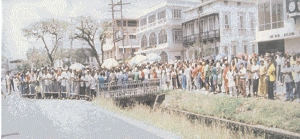 Left, PNC supporters awaiting a decision
from the court. Hoyte would call the decision from the court,
after Chief Justiced dismissed the election petition brought by
(PNC supporter) private citizen, Veronica Delph, "flawed
and insupportable." It only led to more violence on the streets.
Left, PNC supporters awaiting a decision
from the court. Hoyte would call the decision from the court,
after Chief Justiced dismissed the election petition brought by
(PNC supporter) private citizen, Veronica Delph, "flawed
and insupportable." It only led to more violence on the streets.
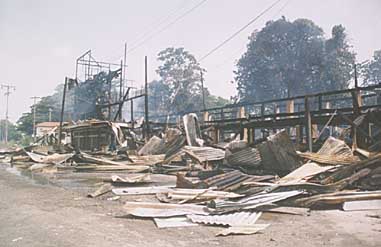 The
end of elections brings the start of violence. Many buildings
were burned down in "mystery fires." An example occurred
on March 21 when the home of Ms. Devika Persaud on Peter Street,
Annandale, burned down, leaving her and her two daughters, Nazir,
7, and Nazeela, 11, homeless at the time. The Ministry of Works
building (see photo) and the MMA
building up the East Coast were also targeted.
The
end of elections brings the start of violence. Many buildings
were burned down in "mystery fires." An example occurred
on March 21 when the home of Ms. Devika Persaud on Peter Street,
Annandale, burned down, leaving her and her two daughters, Nazir,
7, and Nazeela, 11, homeless at the time. The Ministry of Works
building (see photo) and the MMA
building up the East Coast were also targeted.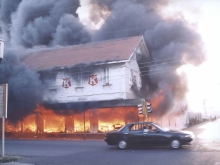 By
April, the situation sinked dangerously. On April 9, there is
widespread rioting in the city. Anti PPP demonstratorts amassed
before Freedom House (PPP HQ on Robb Street). Shots are fired.
There is, reportedly, a video by Mark Benschop showing a man in
a long, black coat going in and out of the back door. At the end
of the shooting, a street vendor's body (Donna McKinnon) was found
in a nearby empty lot. Another bystander, Mr.amnarine Bhoda, is
also shot. A bullet was logged near his spine...he survived. The
death of McKinnon incensed PNC supporters. Rickford Burke, a former
worker (advisor?) under Hoyte, now heading GID based in Brooklyn,
NY, wrote the following in an e-mail transmitted globally; "Afro
woman killed by Indian male." (E-mail dated April 9, 2001).
That night, arsonists took to he Indian-owned stores on Regent
Street; some 9-12 are gutted, inckuding A.H. & L Kissoon (photo).
By
April, the situation sinked dangerously. On April 9, there is
widespread rioting in the city. Anti PPP demonstratorts amassed
before Freedom House (PPP HQ on Robb Street). Shots are fired.
There is, reportedly, a video by Mark Benschop showing a man in
a long, black coat going in and out of the back door. At the end
of the shooting, a street vendor's body (Donna McKinnon) was found
in a nearby empty lot. Another bystander, Mr.amnarine Bhoda, is
also shot. A bullet was logged near his spine...he survived. The
death of McKinnon incensed PNC supporters. Rickford Burke, a former
worker (advisor?) under Hoyte, now heading GID based in Brooklyn,
NY, wrote the following in an e-mail transmitted globally; "Afro
woman killed by Indian male." (E-mail dated April 9, 2001).
That night, arsonists took to he Indian-owned stores on Regent
Street; some 9-12 are gutted, inckuding A.H. & L Kissoon (photo).
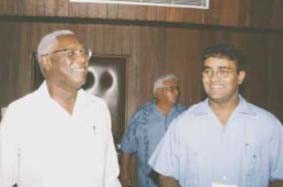 In
April 2001, two weeks after President Jagdeo said he would not
be intimidated by violence, he met with Mr. Hoyte. In the end:
there is Dialogue between the PPP and PNC. The PPP agrees to all
17 concessions made by the PNC, arguing from a "position
of strength"(meaning street violence). See Hoyte and President
Jagdeo after one of their "Dialogue" meets.
In
April 2001, two weeks after President Jagdeo said he would not
be intimidated by violence, he met with Mr. Hoyte. In the end:
there is Dialogue between the PPP and PNC. The PPP agrees to all
17 concessions made by the PNC, arguing from a "position
of strength"(meaning street violence). See Hoyte and President
Jagdeo after one of their "Dialogue" meets.
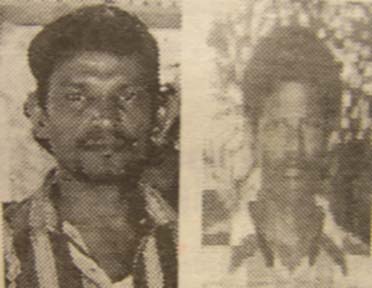 A
group of Black radicals, determined to wrestle power from the
PPP, decided that to destablaise Guyana, race conflicts were needed.
A decision was made for a set of executions. On May 4th, early
in the morning, a father (Bemchand Barran,
left) and his 10-yr-old son (Mervyn Barran) from Enterprise
are executed in the backdam where they went to catch shrimp. Not
far from them Mr. Dhanpaul Jagdeo (photo,
right), from Non Pareil, is found. Each
was executed. One policeman seemed to have taken the case
personally, police detective Harry Kooseram.
The PPP monopolised the funerals, suppressing protests from the
Indian community.The plan to ignite a race war was averted, but
the pressure continued.
A
group of Black radicals, determined to wrestle power from the
PPP, decided that to destablaise Guyana, race conflicts were needed.
A decision was made for a set of executions. On May 4th, early
in the morning, a father (Bemchand Barran,
left) and his 10-yr-old son (Mervyn Barran) from Enterprise
are executed in the backdam where they went to catch shrimp. Not
far from them Mr. Dhanpaul Jagdeo (photo,
right), from Non Pareil, is found. Each
was executed. One policeman seemed to have taken the case
personally, police detective Harry Kooseram.
The PPP monopolised the funerals, suppressing protests from the
Indian community.The plan to ignite a race war was averted, but
the pressure continued. 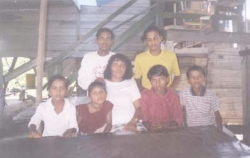
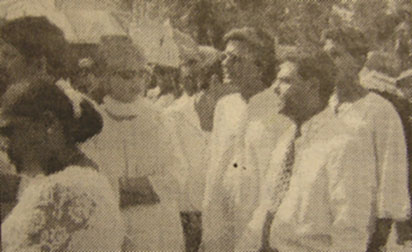
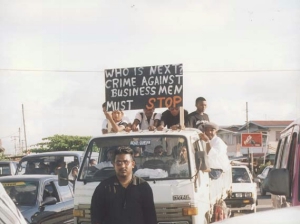 Rahamat
Ali, murdered. Right, crime protest.
Rahamat
Ali, murdered. Right, crime protest.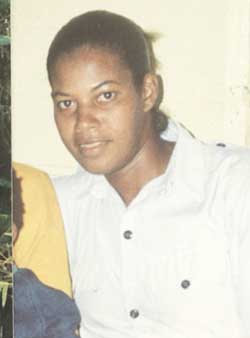
.jpg)
 After Fraser is killed on April 2, he is buried on April 6. That
very morning, the TSS went into Buxton for revenge. It barges
into the home of Shaka Blair (who had a gun but did not fire [see
photo]) and separating him from his wife and child, shoots
him. Apparently Blair did not know his attackers were the police,
and was calling the Vigilance police station. Calls for his phone
records to be made public has thus afr been denied. Blair is taken
in a police vehicle (still alive) and killed before he gets to
the hospital. The extremist group naturally became furious; Shaka
Blair was a key member of a loose organization called the People's
Liberation Movement (PLM), consisting of essentially young Buxtonian
males who aligned with the extremists outside of Buxton, and who
received some rabid political lectures (mostly in Black resistance,
black power, and how Indians/PPP were controlling Guyana) along
with training in arms (by two former senior army members). Buxton
backlands was one of the training ground, but another apparently
over the West Coast of Demerara in Den Amstel (See Kaieteur News,
June 2005). For more on Shaka Blair, refer to a
After Fraser is killed on April 2, he is buried on April 6. That
very morning, the TSS went into Buxton for revenge. It barges
into the home of Shaka Blair (who had a gun but did not fire [see
photo]) and separating him from his wife and child, shoots
him. Apparently Blair did not know his attackers were the police,
and was calling the Vigilance police station. Calls for his phone
records to be made public has thus afr been denied. Blair is taken
in a police vehicle (still alive) and killed before he gets to
the hospital. The extremist group naturally became furious; Shaka
Blair was a key member of a loose organization called the People's
Liberation Movement (PLM), consisting of essentially young Buxtonian
males who aligned with the extremists outside of Buxton, and who
received some rabid political lectures (mostly in Black resistance,
black power, and how Indians/PPP were controlling Guyana) along
with training in arms (by two former senior army members). Buxton
backlands was one of the training ground, but another apparently
over the West Coast of Demerara in Den Amstel (See Kaieteur News,
June 2005). For more on Shaka Blair, refer to a 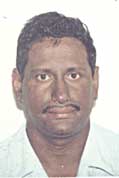 Pressure mounted with the second handbill ("Five for Freedom");
they refused to apologise tp anyone and instead it reflected an
intensified program from the militants-criminals, to include the
targeting of Black policemen (seen as slaves to the PPP) and government
officials. On April 14th, as a criminal was being buried, one
of his friends decided to get revenge. The
selected target was a police who may have found out something
about the triple-executions (Barrans, Jagdeo), which atrracted
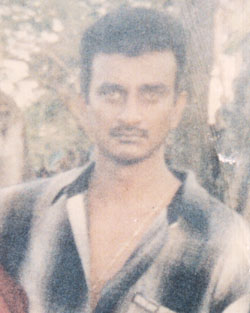
him personally. On April 15, Compton Cambridge shot detective
Harry Kooseeram (photo, left) as he headed for work. One person
in the media noted that the "killing of Sgt. Harry Kooseram
is racially motivated. It's one for one. It's hit back time..."
(see Guyana Chronicle, Sept 11, 2002.)
Pressure mounted with the second handbill ("Five for Freedom");
they refused to apologise tp anyone and instead it reflected an
intensified program from the militants-criminals, to include the
targeting of Black policemen (seen as slaves to the PPP) and government
officials. On April 14th, as a criminal was being buried, one
of his friends decided to get revenge. The
selected target was a police who may have found out something
about the triple-executions (Barrans, Jagdeo), which atrracted
him personally. On April 15, Compton Cambridge shot detective
Harry Kooseeram (photo, left) as he headed for work. One person
in the media noted that the "killing of Sgt. Harry Kooseram
is racially motivated. It's one for one. It's hit back time..."
(see Guyana Chronicle, Sept 11, 2002.)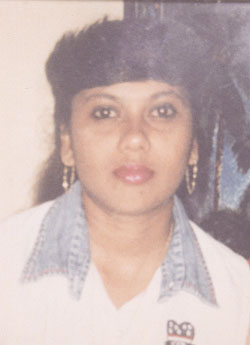
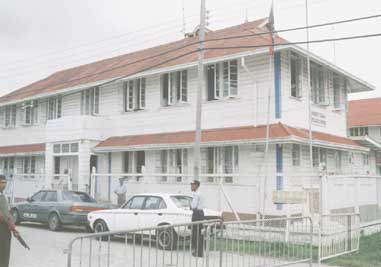
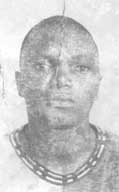
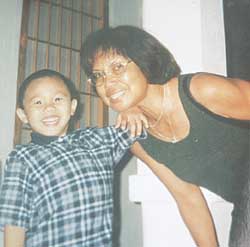 This did not prevent one of the largest of operations by the gunmen
undertaken; on June 13th, coming in from the sea, more than a
dozen heavily armed gunmen descended on Vergenoegen (West Coast
Demerara), attacking the Ng-See-Quan family who owned a sawmill,
etc. Businesswoman Claudette Ng-See-Quan (photo,
left) is shot an killed. Her husband Hilton, once a PNC
supporter, had switched allegiance to the PPP. The use of the
sea by the bandits to carry out such sophisticated operations
successfully, was a new aspect in their operation.
This did not prevent one of the largest of operations by the gunmen
undertaken; on June 13th, coming in from the sea, more than a
dozen heavily armed gunmen descended on Vergenoegen (West Coast
Demerara), attacking the Ng-See-Quan family who owned a sawmill,
etc. Businesswoman Claudette Ng-See-Quan (photo,
left) is shot an killed. Her husband Hilton, once a PNC
supporter, had switched allegiance to the PPP. The use of the
sea by the bandits to carry out such sophisticated operations
successfully, was a new aspect in their operation. 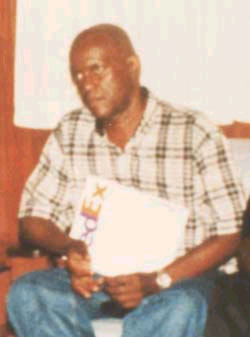 Before the march began, a rally was held at which Mr. Philip Bynoe
(photo, left), a PNC candidate for the 2001 elections, and Mr.
Robert Corbin amongst others, spoke. The march was not an official
PNC march, but it had the blessings of the party. At this rally,
Mr. Bynoe openly suggested revolt; ..." The PNC did not upbraid
him or distance itself from Bynoe. (See SN editorial, "Responsibility,"
" 7/2002.)
Before the march began, a rally was held at which Mr. Philip Bynoe
(photo, left), a PNC candidate for the 2001 elections, and Mr.
Robert Corbin amongst others, spoke. The march was not an official
PNC march, but it had the blessings of the party. At this rally,
Mr. Bynoe openly suggested revolt; ..." The PNC did not upbraid
him or distance itself from Bynoe. (See SN editorial, "Responsibility,"
" 7/2002.) 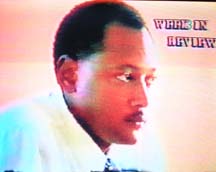 The
PNC itself had said its job was to "depose" the democratically
elected PPP, as opposed to "replacing" it. Or: the PNC/R
is "in the business of trying to get the government of the
day out of office" and to have itself "as the alternate
government". "We stand firm that
it is our business to expose...oppose...and depose...them (the
Government). We will continue to do that and we see nothing
wrong with that. We are not saying that we will do so by force
of arms.""(There is nothing wrong with) any statement
which says that as an opposition party, we are attempting to remove
the Government..." —Trotman (left), 6/21/ 2002
The
PNC itself had said its job was to "depose" the democratically
elected PPP, as opposed to "replacing" it. Or: the PNC/R
is "in the business of trying to get the government of the
day out of office" and to have itself "as the alternate
government". "We stand firm that
it is our business to expose...oppose...and depose...them (the
Government). We will continue to do that and we see nothing
wrong with that. We are not saying that we will do so by force
of arms.""(There is nothing wrong with) any statement
which says that as an opposition party, we are attempting to remove
the Government..." —Trotman (left), 6/21/ 2002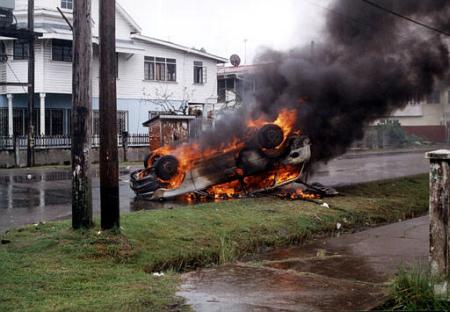
.jpg) The
PNC disassociated itself from the stroming of the President's
Office, whihc resulted in two people being shot and killed. But
Raphael Trotman broke ranks and said; "The party should claim
equal responsibility. [The events] were not planned by the party
nor the party’s executive, but the party cannot divorce
itself from the events..." "The party has to be brave
enough to accept some responsibility in terms of the loss of life
and all the persons affected; they are consequences which flowed
and therefore we cannot pretend we were in no way involved. The
entire episode is regretted, particularly the loss of life and
property."—Trotman, July 4.
The
PNC disassociated itself from the stroming of the President's
Office, whihc resulted in two people being shot and killed. But
Raphael Trotman broke ranks and said; "The party should claim
equal responsibility. [The events] were not planned by the party
nor the party’s executive, but the party cannot divorce
itself from the events..." "The party has to be brave
enough to accept some responsibility in terms of the loss of life
and all the persons affected; they are consequences which flowed
and therefore we cannot pretend we were in no way involved. The
entire episode is regretted, particularly the loss of life and
property."—Trotman, July 4.
 "Even
more disturbing on Friday was the confrontation that occurred
on the East Coast after a Buxtonian was suspected of committing
a gross robbery and attack on a Non Pareil woman. The woman was
terrorised, robbed and chopped. After raising an alarm, nearby
residents chased the attacker to a house in the village of Strathspey.
The occupants of the house refused to surrender the attacker and
more than that, word was sent to the village of Buxton and dozens
of Buxtonians descended on the area ostensibly to free the attacker.
Why would the capture of a suspected criminal move Buxtonians
to go to his `rescue’? After the police had apprehended
the attacker and left the area, it was then that things got hairy.
Buxtonians attacked Strathspey villagers who they believed had
been responsible for the apprehension of the attacker. The Buxtonians
said that they were fired at first. The villagers vehemently denied
this."—
Stabroek News, July 8, 2002
"Even
more disturbing on Friday was the confrontation that occurred
on the East Coast after a Buxtonian was suspected of committing
a gross robbery and attack on a Non Pareil woman. The woman was
terrorised, robbed and chopped. After raising an alarm, nearby
residents chased the attacker to a house in the village of Strathspey.
The occupants of the house refused to surrender the attacker and
more than that, word was sent to the village of Buxton and dozens
of Buxtonians descended on the area ostensibly to free the attacker.
Why would the capture of a suspected criminal move Buxtonians
to go to his `rescue’? After the police had apprehended
the attacker and left the area, it was then that things got hairy.
Buxtonians attacked Strathspey villagers who they believed had
been responsible for the apprehension of the attacker. The Buxtonians
said that they were fired at first. The villagers vehemently denied
this."—
Stabroek News, July 8, 2002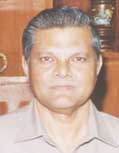 "The worst sin that leaders can commit is to manipulate innocents
and the marginalised in our society to be cut down by bullets
while they fiddle the same old tunes in the safe havens of their
political lairs, while their puppeteers, across the entire spectrum
of our political landscape, use their access to the media houses
and their mobile loud speakers to manipulate others, but then
beat a cowardly and hasty retreat when the going gets tough.
"The worst sin that leaders can commit is to manipulate innocents
and the marginalised in our society to be cut down by bullets
while they fiddle the same old tunes in the safe havens of their
political lairs, while their puppeteers, across the entire spectrum
of our political landscape, use their access to the media houses
and their mobile loud speakers to manipulate others, but then
beat a cowardly and hasty retreat when the going gets tough. 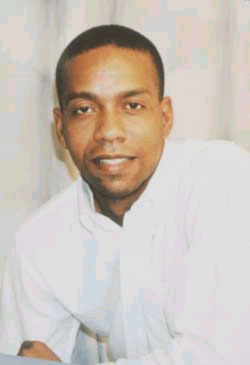 In the city the marchers are greeted by Mark Benschop, carrying
his bullhorn. After the melee, warrants are issused for Mr. Bynoe
and Mr. Benschop. Mr. Bynoe flees and is still unheard from but
Mr. Benschop has been arrested and is currently in prison, awaiting
a second trial—the first ended in a mistrial when all but
one of the jurors found him not-gulity. Here is the opinion of
his wife, Maria Benschop:
In the city the marchers are greeted by Mark Benschop, carrying
his bullhorn. After the melee, warrants are issused for Mr. Bynoe
and Mr. Benschop. Mr. Bynoe flees and is still unheard from but
Mr. Benschop has been arrested and is currently in prison, awaiting
a second trial—the first ended in a mistrial when all but
one of the jurors found him not-gulity. Here is the opinion of
his wife, Maria Benschop:  A
second controversial talk-show host that was seen as being linked
to the anti-government march is Rondal Waddell
(left, photo) who was tried for arson
(for supposedly stealing a Bucket from a gas station), but was
found not guilty. Waddell was a PNC candidate in 2001. Supporting
Waddell, the ACDA noted that the government was taking full advantage
of the support it has received from the recently concluded CARICOM’s
meeting to place severe repression on Blacks. Further, that "this
apparent attractive option of political repression would only
worsen th e already dangerous situation in the country and reinforce
the African Guyanese will to continue their struggle for socio-economic
liberation." July, 9, 2002. Note: In October 2005, after
the adbudtion of 2 Guysuco workers in the Buxton area and after
two Indians are killed and burned in their car by gunmen, Waddell
says on his program that these acts are right, and should not
be stopped. He is pulled from the air.
A
second controversial talk-show host that was seen as being linked
to the anti-government march is Rondal Waddell
(left, photo) who was tried for arson
(for supposedly stealing a Bucket from a gas station), but was
found not guilty. Waddell was a PNC candidate in 2001. Supporting
Waddell, the ACDA noted that the government was taking full advantage
of the support it has received from the recently concluded CARICOM’s
meeting to place severe repression on Blacks. Further, that "this
apparent attractive option of political repression would only
worsen th e already dangerous situation in the country and reinforce
the African Guyanese will to continue their struggle for socio-economic
liberation." July, 9, 2002. Note: In October 2005, after
the adbudtion of 2 Guysuco workers in the Buxton area and after
two Indians are killed and burned in their car by gunmen, Waddell
says on his program that these acts are right, and should not
be stopped. He is pulled from the air. For
example, the PNC Vice Chairman (left),
Vincent Alexander, in an interview, made it clear that
it was necessary to attack Indians;"Whilst
I do not look forward to paying a high price the fact is in the
long term these things add up to the general good of the society...
What I find is that even though these instances
may be painful and costly, the accumulation of all these interactions
and conflicts may result in a state of affairs, which is far better
than that which existed before." (See Stabroek
News, August 14, 2002.)
For
example, the PNC Vice Chairman (left),
Vincent Alexander, in an interview, made it clear that
it was necessary to attack Indians;"Whilst
I do not look forward to paying a high price the fact is in the
long term these things add up to the general good of the society...
What I find is that even though these instances
may be painful and costly, the accumulation of all these interactions
and conflicts may result in a state of affairs, which is far better
than that which existed before." (See Stabroek
News, August 14, 2002.)
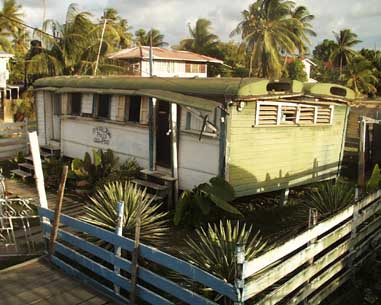
.jpg)
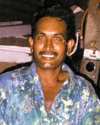
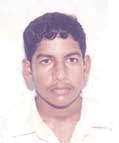 Left,
second policeman (Outar Kissoon) killed. Right, PPP youth member,
Balram Kandhai, who was killed after teh vehicle he was travelling
in (after leaving the PPP Congress) was shot at. Pardat and Kissoon,
policemen, were not armed and
did not carry sidearms. In other words, they had not even the
option to fight back even if they wanted to. This is PPP policy
policy.
Left,
second policeman (Outar Kissoon) killed. Right, PPP youth member,
Balram Kandhai, who was killed after teh vehicle he was travelling
in (after leaving the PPP Congress) was shot at. Pardat and Kissoon,
policemen, were not armed and
did not carry sidearms. In other words, they had not even the
option to fight back even if they wanted to. This is PPP policy
policy. 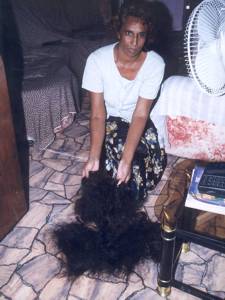 Inside
Buxton, other conflicts were surfacing. Gangs began to swabble
with weapons; women and young girls were being raped. Besides,
the thrill of robbery was overshadowing the supposed political
purpose for some gunmen, and they began to fued with the "masterminds"
in Georgetown, including those who were media people. The original
plan conjured up in 2001 to raise a force of insurrectionists
began to shake. The July 3 fiasco had contributed a damper to
the cause; Bynoe was on the run, Benschop behind bars, and Waddell
watched closely. The men in Brooklyn exporting guns into Guyana
slowed down; the army man who gave training in arms had a few
squabbles with his soldiers.
Inside
Buxton, other conflicts were surfacing. Gangs began to swabble
with weapons; women and young girls were being raped. Besides,
the thrill of robbery was overshadowing the supposed political
purpose for some gunmen, and they began to fued with the "masterminds"
in Georgetown, including those who were media people. The original
plan conjured up in 2001 to raise a force of insurrectionists
began to shake. The July 3 fiasco had contributed a damper to
the cause; Bynoe was on the run, Benschop behind bars, and Waddell
watched closely. The men in Brooklyn exporting guns into Guyana
slowed down; the army man who gave training in arms had a few
squabbles with his soldiers. .jpg) On
August 4th, one of themost distinct racist attacks occurred. Ms.
Anita Singh of
Melanie Damishana is robbed by a gang of Black bandits; one cuts
off her long hair with a knife because as he said, he didn't like
"her kind of people" (Indians). On August 24th,
Mr. Vibert Inniss, second in command of CANU, is gunned down as
he bought a newspaper in Buxton (see photo,
left).
On
August 4th, one of themost distinct racist attacks occurred. Ms.
Anita Singh of
Melanie Damishana is robbed by a gang of Black bandits; one cuts
off her long hair with a knife because as he said, he didn't like
"her kind of people" (Indians). On August 24th,
Mr. Vibert Inniss, second in command of CANU, is gunned down as
he bought a newspaper in Buxton (see photo,
left).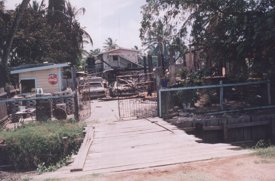
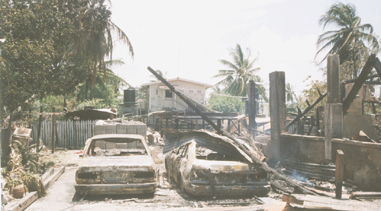
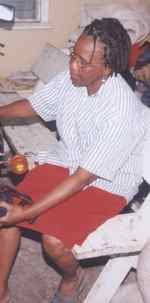
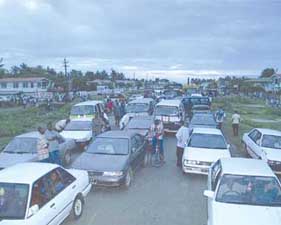 On
August 16th, the first real impact of the death squad or "phantom"
group emerged with the discovery of the body of Andrew
Douglas, one of the five escapees. His body was found in
Farm, on the East Bank of Demerara. Initially, it had been thought
that his colleagues had left him there after a shootout with the
police, or he may have been so injured that his collagues thought
it best to kill him. But he was shot by a death squad who had
confronted the escapees at a popular nightspot on Shariff Street.
This was verified by George Bacchus, an informant for the squads.
On
August 16th, the first real impact of the death squad or "phantom"
group emerged with the discovery of the body of Andrew
Douglas, one of the five escapees. His body was found in
Farm, on the East Bank of Demerara. Initially, it had been thought
that his colleagues had left him there after a shootout with the
police, or he may have been so injured that his collagues thought
it best to kill him. But he was shot by a death squad who had
confronted the escapees at a popular nightspot on Shariff Street.
This was verified by George Bacchus, an informant for the squads.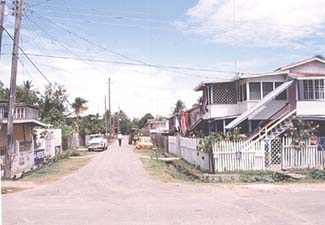 Left,
Gale street, where youths went rampaging on the day of Douglas'
funeral.
Left,
Gale street, where youths went rampaging on the day of Douglas'
funeral.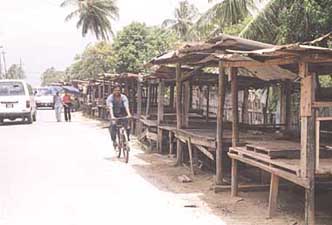
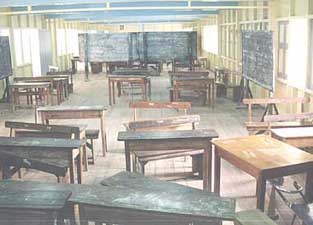
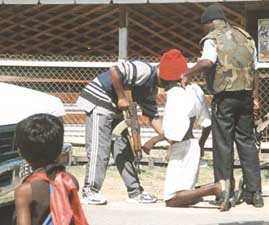 Annnandale
and Stratsprey have come in for numerous criminal attacks and
often, life in these vilagers were severely altered as tension
between the gunmen and the security forces prevailed. There were
days when classes were cancelled (photo,
above), when no one sold at their stalls (photo,
left above), and when the police came into these villages
sometimes during "raids" (side
photo). Above re a few photos of these scenes. Sometimes
what happens in these villages is extended down the East Coast
to others, especially Non Pareil, Coldingen, and Enterprise.
Annnandale
and Stratsprey have come in for numerous criminal attacks and
often, life in these vilagers were severely altered as tension
between the gunmen and the security forces prevailed. There were
days when classes were cancelled (photo,
above), when no one sold at their stalls (photo,
left above), and when the police came into these villages
sometimes during "raids" (side
photo). Above re a few photos of these scenes. Sometimes
what happens in these villages is extended down the East Coast
to others, especially Non Pareil, Coldingen, and Enterprise. 
 On
September 6th, another policeman, Leyland
October (photo, left) is killed,
as he bought ice-cream for his kids. "Inspector Gadjet,"
Romel Reman, and Shawn Gittens are responsible. A fourth person,
Michael Singh, gave himself up to police, was thereafter released.
Two weeks later on September 25th, after a session of smoking
marijuana, gunmen (two or three, one being Shawn Brown) decided
abruptly to attack Natoo's Liquor
store on Pike Street in Kitty, which was famous for its government-PPP
patrons. They sprayed the bar with gunfire; four people are killed;
race-car driver, Gavin Narine, Joy Arjune,
Lloyd Singh, and a customs broker. About a dozen are injured,
including the Director of Public Prosecution (DPP), Mr. Dennis
Hanomansingh. This attack was first thought to be political, but
one may debate whether it truly was since it was not a premeditated
attack ordered by the "masterminds." The DPP would resign
later from his post after the PPP refused him protection.
On
September 6th, another policeman, Leyland
October (photo, left) is killed,
as he bought ice-cream for his kids. "Inspector Gadjet,"
Romel Reman, and Shawn Gittens are responsible. A fourth person,
Michael Singh, gave himself up to police, was thereafter released.
Two weeks later on September 25th, after a session of smoking
marijuana, gunmen (two or three, one being Shawn Brown) decided
abruptly to attack Natoo's Liquor
store on Pike Street in Kitty, which was famous for its government-PPP
patrons. They sprayed the bar with gunfire; four people are killed;
race-car driver, Gavin Narine, Joy Arjune,
Lloyd Singh, and a customs broker. About a dozen are injured,
including the Director of Public Prosecution (DPP), Mr. Dennis
Hanomansingh. This attack was first thought to be political, but
one may debate whether it truly was since it was not a premeditated
attack ordered by the "masterminds." The DPP would resign
later from his post after the PPP refused him protection.
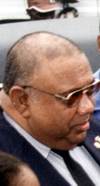
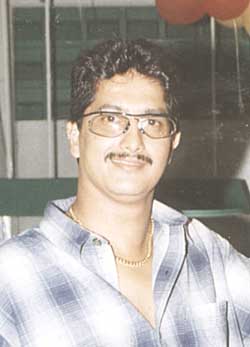 While
Guyana mourned, the very next day on September 26 an extraordinary
gang of gunmen (2 dozen), drove by the Vigilance Police Station
and sprayed it with bullets as was done to other police stations.
Fortunately, no one was killed; much of this was due to the high
concrete wall at the front of the station. On October 1st, the
first case of kidnapping involving a wealthy Indian businessman
occurred when auto dealer, Mr. Kamal Seebarran
(left), is abducted. He is
freed after paying a G$17 million ransom.
While
Guyana mourned, the very next day on September 26 an extraordinary
gang of gunmen (2 dozen), drove by the Vigilance Police Station
and sprayed it with bullets as was done to other police stations.
Fortunately, no one was killed; much of this was due to the high
concrete wall at the front of the station. On October 1st, the
first case of kidnapping involving a wealthy Indian businessman
occurred when auto dealer, Mr. Kamal Seebarran
(left), is abducted. He is
freed after paying a G$17 million ransom. 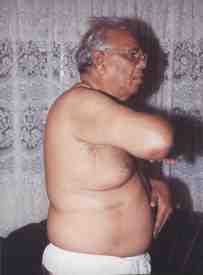 It
seemed obvious that money was not only being stolen, but raised
to finance the very campaign undertaken by the militants and gunmen.
More Indian businessmen (e.g., Patrick Seebarran,
see photo below) were attacked.
In addition, Indian professionals considered to be wealthy such
as Mr. Dev Sharma, the executive
director of the Georgetown Chamber of Commerce and Industry, were
also targetted. Mr. Sharma was kidnapped and taken to Buxton.
He managed to escape in one of the few daring examples (see GIHA
Crime Report for his account).
It
seemed obvious that money was not only being stolen, but raised
to finance the very campaign undertaken by the militants and gunmen.
More Indian businessmen (e.g., Patrick Seebarran,
see photo below) were attacked.
In addition, Indian professionals considered to be wealthy such
as Mr. Dev Sharma, the executive
director of the Georgetown Chamber of Commerce and Industry, were
also targetted. Mr. Sharma was kidnapped and taken to Buxton.
He managed to escape in one of the few daring examples (see GIHA
Crime Report for his account).  On
October 7th, in a crime that reminded one of the Anita Singh hair-cutting
case, Ms. Jean Badrinauth, is beaten
and almost raped by 3 bandits (2 Black, 1 Indian) in her Foulis
home. The two who were Black insisted that
the Indian rape and kill her. He did neither. What this
and the Anita Singh crime indicate is that there is a strong sense
of race (or racial humiliation) amongst the Black criminals who
attack Indian civilains. On October 23rd, Kamaldeo
Ganesh (photo, left) of Bladen
Hall is kidnapped, allegedly sodomised, and tortured. His body
is found in Buxton four days later. His was the first
kidnapped victim who died. Before his execution, Ganesh
was said to have wept, pleading for his life. His wife was given
a mere 15 minutes to provide a ransom.
On
October 7th, in a crime that reminded one of the Anita Singh hair-cutting
case, Ms. Jean Badrinauth, is beaten
and almost raped by 3 bandits (2 Black, 1 Indian) in her Foulis
home. The two who were Black insisted that
the Indian rape and kill her. He did neither. What this
and the Anita Singh crime indicate is that there is a strong sense
of race (or racial humiliation) amongst the Black criminals who
attack Indian civilains. On October 23rd, Kamaldeo
Ganesh (photo, left) of Bladen
Hall is kidnapped, allegedly sodomised, and tortured. His body
is found in Buxton four days later. His was the first
kidnapped victim who died. Before his execution, Ganesh
was said to have wept, pleading for his life. His wife was given
a mere 15 minutes to provide a ransom.
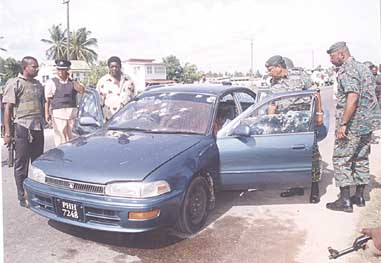
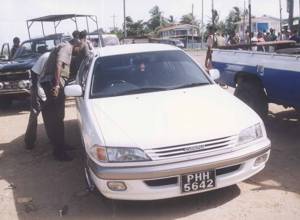
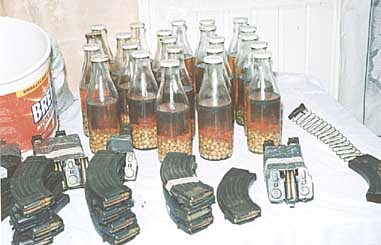
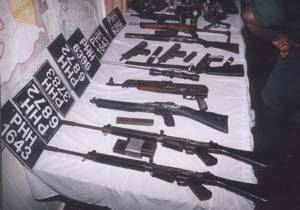
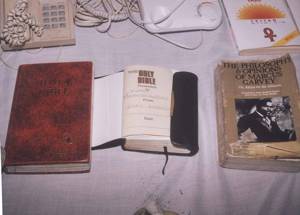

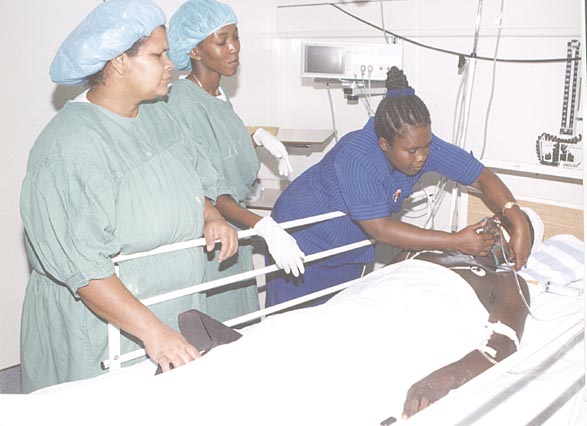 But
on November 14, a big kill occurred when the elusive "Inspector
Gadget" (also Amar Gobin) aka Premkumar Sukraj of Leonora,
the alleged fisherman, is gunned down in the Middle Road/La
Penitance area. He was shot at least twice at the back of the
head and from its side. Job done by phantom. Big sigh of relief
from the Guyanese community, especially the women. On November
23, a big shooting spree takes place in Buxton. When it's over,
one gunman was found dead and a GDF soldier (Private
Ryan Thompson, photo, left)
was inadvertently shot and wounded in his head. He is air-dashed
to Brazil for treatment.
But
on November 14, a big kill occurred when the elusive "Inspector
Gadget" (also Amar Gobin) aka Premkumar Sukraj of Leonora,
the alleged fisherman, is gunned down in the Middle Road/La
Penitance area. He was shot at least twice at the back of the
head and from its side. Job done by phantom. Big sigh of relief
from the Guyanese community, especially the women. On November
23, a big shooting spree takes place in Buxton. When it's over,
one gunman was found dead and a GDF soldier (Private
Ryan Thompson, photo, left)
was inadvertently shot and wounded in his head. He is air-dashed
to Brazil for treatment. .jpg)
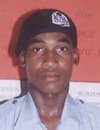
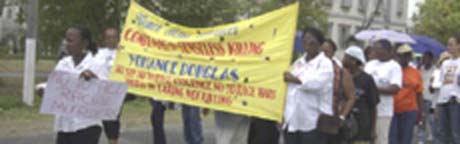
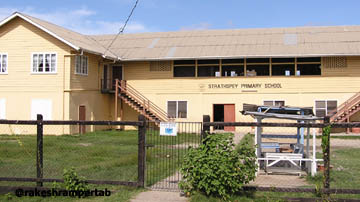 Students
Protest against the Army and the Government: Placard Messages
Include:
Students
Protest against the Army and the Government: Placard Messages
Include: 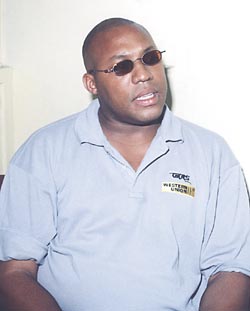 ...
...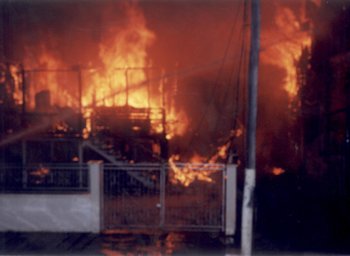
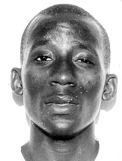 On
May 15, GDF Lance Corporal Shemton Dodson,
is killed during a shoot-out. He was the first and only enlisted
soldier to die. Kidnapped businessman Viticharan Singh, of De
Hoop Mahaica, was at the time held in Buxton. Fugitive, Mark Anthony
Phillips called ‘Big Batty Mark’
was also killed. Back in the US, a US District Court issues a
wanted bulletin for Shawn Brown, for the kidnapping of Steve Lesniak,
a man on the US government payroll. On June 4, the security forces
digs in—and Romel Reman and 5 others
are shot dead. This is widely seen as the security forces
cracking down after the Americans became irated. Also, the army's
attitude had changed after one of its own was killed
On
May 15, GDF Lance Corporal Shemton Dodson,
is killed during a shoot-out. He was the first and only enlisted
soldier to die. Kidnapped businessman Viticharan Singh, of De
Hoop Mahaica, was at the time held in Buxton. Fugitive, Mark Anthony
Phillips called ‘Big Batty Mark’
was also killed. Back in the US, a US District Court issues a
wanted bulletin for Shawn Brown, for the kidnapping of Steve Lesniak,
a man on the US government payroll. On June 4, the security forces
digs in—and Romel Reman and 5 others
are shot dead. This is widely seen as the security forces
cracking down after the Americans became irated. Also, the army's
attitude had changed after one of its own was killed 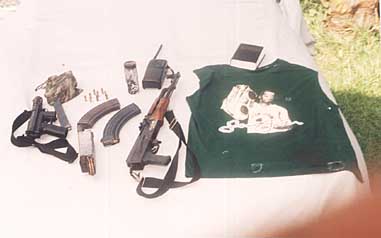 Left,
clothes, guns associated with Romel Reman.
Left,
clothes, guns associated with Romel Reman.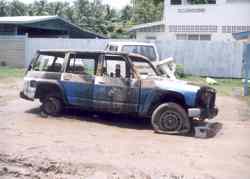
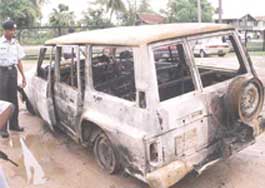

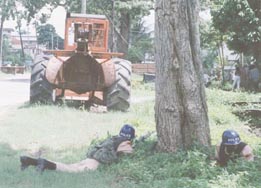 Police
vehicles that were ambushed. Police on seawall taking up position.
Two memebers of the TSS unit in the city.
Police
vehicles that were ambushed. Police on seawall taking up position.
Two memebers of the TSS unit in the city. 
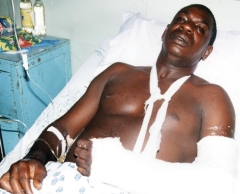
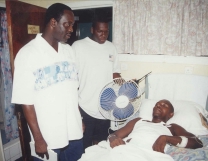 Sgt. Eon Smith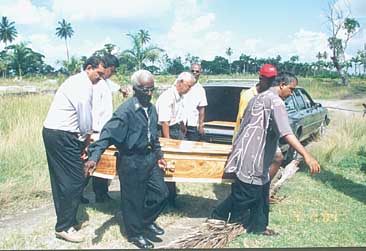
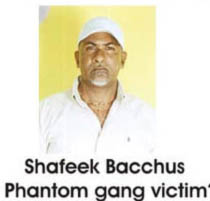
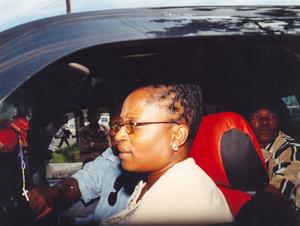 Left,
Debra Douglas goes free after a year in jail, accquitted of the
murder of George Bacchus
Left,
Debra Douglas goes free after a year in jail, accquitted of the
murder of George Bacchus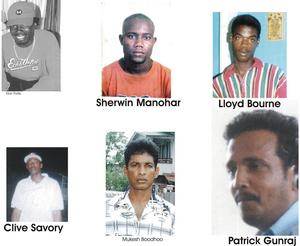
 Bacchus
claimed to have visited the home of Minister
Gajraj many times, where he saw numerous weapons. He linked
a high-ranking police officer to a local businessman believed
to have close ties to the death squad; the officer provided names
of convicts, and the phantom dusts them off. Public pressure mounted,
especially from the Black community (PNC, ACDA, and a new organ
called People's Movement for Justice) The PCD held a "Rule
of Law" march on April 23, 200, demanding that there
be an inquiry into alleged death squad killings and the link with
the home affairs minister. Most Indians who supported the presence
of the phantom, since they have been the primary victims of crime
(not the only victims though), did not care much about the march
or teh inquiry. In May of 2004, President Jagdeo concedes to a
Presidential Commission of Inquiry. Gajraj goes on leave. On May
8, he says;
Bacchus
claimed to have visited the home of Minister
Gajraj many times, where he saw numerous weapons. He linked
a high-ranking police officer to a local businessman believed
to have close ties to the death squad; the officer provided names
of convicts, and the phantom dusts them off. Public pressure mounted,
especially from the Black community (PNC, ACDA, and a new organ
called People's Movement for Justice) The PCD held a "Rule
of Law" march on April 23, 200, demanding that there
be an inquiry into alleged death squad killings and the link with
the home affairs minister. Most Indians who supported the presence
of the phantom, since they have been the primary victims of crime
(not the only victims though), did not care much about the march
or teh inquiry. In May of 2004, President Jagdeo concedes to a
Presidential Commission of Inquiry. Gajraj goes on leave. On May
8, he says; 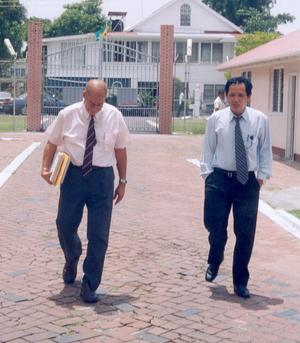 Justice
Claude Chang and Norman McClean, part of the 3-member Commission
of Inquiry, entering the Office of the President with their findings.
Justice
Claude Chang and Norman McClean, part of the 3-member Commission
of Inquiry, entering the Office of the President with their findings.
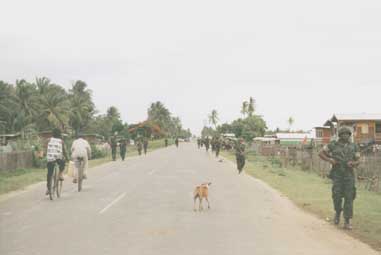
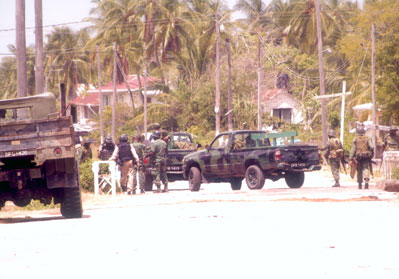
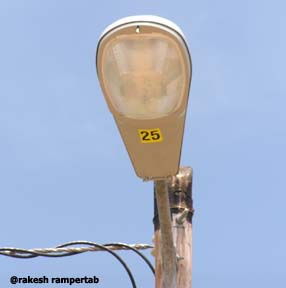
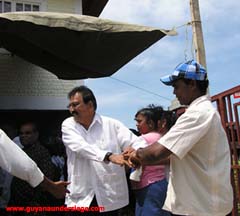 h
h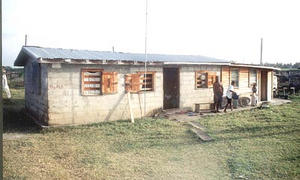
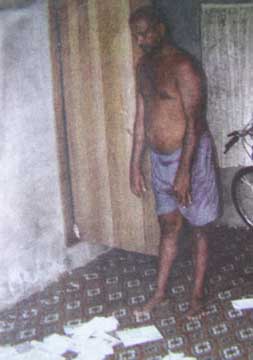
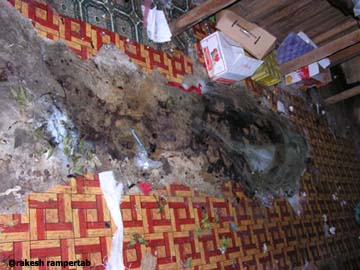

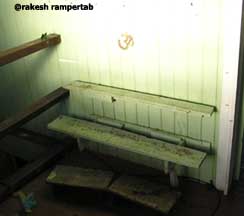
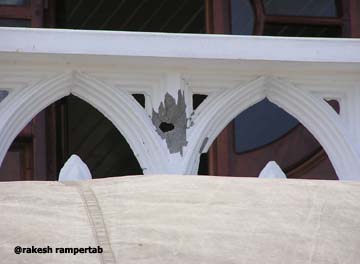
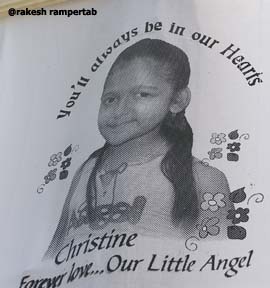
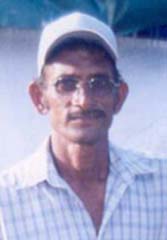
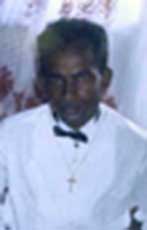
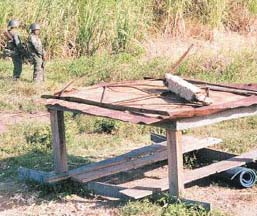
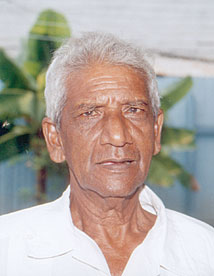
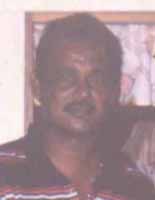
 On
August 26, a vehicle drove alonside the Buxton Embankment road
and opened fire indiscriminately, killing 16 yr-old Delon
Headley (left), who was
on hsi way to a shop. Also shot was Brian Smith, Delroy Scott,
and Leon Adams. It has been argued that this was a crime committed
to arouse the Buxtonians into thinking it was done by the phantoms,
or pro-PPP elements, and therefore, hoepfully, Buxtonians would
retaliate. The aim, a race conflict. This is not the first time
that an unknown vehicle drove into Buxton and began shooting—but
what is differnt here is the selection of targets. the people
injured and killed are not fugitives.
On
August 26, a vehicle drove alonside the Buxton Embankment road
and opened fire indiscriminately, killing 16 yr-old Delon
Headley (left), who was
on hsi way to a shop. Also shot was Brian Smith, Delroy Scott,
and Leon Adams. It has been argued that this was a crime committed
to arouse the Buxtonians into thinking it was done by the phantoms,
or pro-PPP elements, and therefore, hoepfully, Buxtonians would
retaliate. The aim, a race conflict. This is not the first time
that an unknown vehicle drove into Buxton and began shooting—but
what is differnt here is the selection of targets. the people
injured and killed are not fugitives. 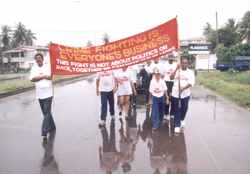
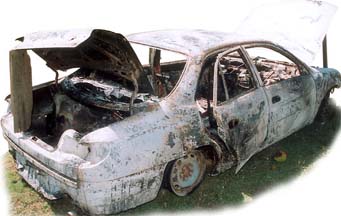
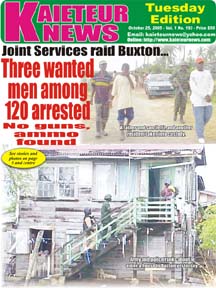
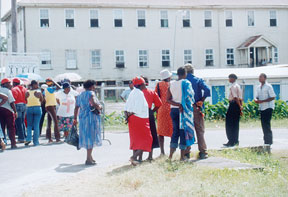

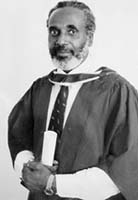 The
election year of 2006 begins with the execution of Mr. Ronald
Waddell, controversial TV talk-show host and one of the central
figures supporting the extremists, one of the men alluded to as
a "mastermind" behind the resistance to overthrown the
PPP government. Of course, he was dropped from his HBTV (Channel
9) program, "Taking Care of Business" in 2005, after
making controversial remarks in which he saluted the campaign
of the Buxton-based gunmen. He is shot 13 times by two gunmen
infront of his home. A few days after, Eusi Kwayana makes a call
for "outside help" if the police is still having severe
problems after 7 days, but after three weeks, despite holding
ex-policeman, Sean Hinds, who was also held and then freed of
the murder of Shafeek Bacchus, the police is yet to make any significant
headway. Meanwhile, in the press, Indians denounced Mr. Waddell
as a person who preached anti-Indian racism and engaged with the
Buxton gunmen, and therefore deserved being gunned down. On the
other side, some Blacks such as Colin Bascom in the UK sees Mr.
Waddell as some kind of folk hero, and uses this opportunity to
speak about "Black-on-Black" violence.
The
election year of 2006 begins with the execution of Mr. Ronald
Waddell, controversial TV talk-show host and one of the central
figures supporting the extremists, one of the men alluded to as
a "mastermind" behind the resistance to overthrown the
PPP government. Of course, he was dropped from his HBTV (Channel
9) program, "Taking Care of Business" in 2005, after
making controversial remarks in which he saluted the campaign
of the Buxton-based gunmen. He is shot 13 times by two gunmen
infront of his home. A few days after, Eusi Kwayana makes a call
for "outside help" if the police is still having severe
problems after 7 days, but after three weeks, despite holding
ex-policeman, Sean Hinds, who was also held and then freed of
the murder of Shafeek Bacchus, the police is yet to make any significant
headway. Meanwhile, in the press, Indians denounced Mr. Waddell
as a person who preached anti-Indian racism and engaged with the
Buxton gunmen, and therefore deserved being gunned down. On the
other side, some Blacks such as Colin Bascom in the UK sees Mr.
Waddell as some kind of folk hero, and uses this opportunity to
speak about "Black-on-Black" violence. 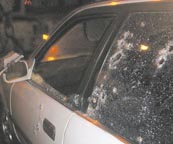 Ms. Bonita Harris, the wife of Mr. Waddell argues that he was
a good man, and Waddell's own brother, Ovid W. Smith opined that
people misunderstood Waddell's "message." "My brother
was a very spiritual person who was not afraid to die for the
poor, oppressed, victimised and discriminated" (see SN 02/21/06).
But it was not enough. It may never be enough to convince Indians
about Waddell's role in the recent surge in race violence. "I
was really mad. My first cousin was attacked in front of her daughter
and sexually molested in Coldingen during the crime spree. I blame
the beloved husband of Bonita Harris, Ronald Waddell," wrote
one L.Singh (KN 02/17/06)
Ms. Bonita Harris, the wife of Mr. Waddell argues that he was
a good man, and Waddell's own brother, Ovid W. Smith opined that
people misunderstood Waddell's "message." "My brother
was a very spiritual person who was not afraid to die for the
poor, oppressed, victimised and discriminated" (see SN 02/21/06).
But it was not enough. It may never be enough to convince Indians
about Waddell's role in the recent surge in race violence. "I
was really mad. My first cousin was attacked in front of her daughter
and sexually molested in Coldingen during the crime spree. I blame
the beloved husband of Bonita Harris, Ronald Waddell," wrote
one L.Singh (KN 02/17/06)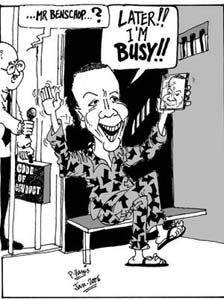
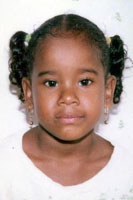
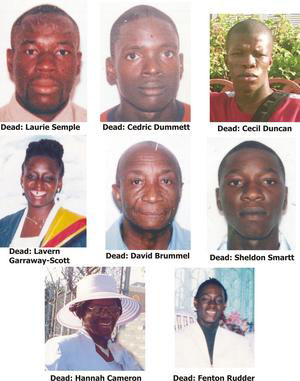 After
the "great flood" of 2005, it is Mash again and this
time, the PNC joins the parade. Good for the "One people"
idea, one suppose, despite th violence. This year, as in 2002,
Mash is again overshadowed by violence when Agricola, EBD, becomes
a place of mayhem and blood on February 26, as gunmen numbering
around 20, well armed and well connected via cell phones, occupied
strategic positions around 10 pm along the new four-lane highway,
including at the heads of both entrances...and staged an attack
on the Two Brothers gas sation, owned by Shirazi Ali. Three workers
of a security firm, MMC, are shot and killed as they, allegedly
were putting air into a tire. The gunmen tried to blow-up the
gas station but the vibration and heat in the vicinity triggered
an automatic lock-down of the pumps. This is the second time in
years that the automatic locks have saved this station, a prime
target for the Buxton-based gunmen. They also attempted to set
a mini bus there alight, but that failed...after which the gunmen
headed into Agricola.
After
the "great flood" of 2005, it is Mash again and this
time, the PNC joins the parade. Good for the "One people"
idea, one suppose, despite th violence. This year, as in 2002,
Mash is again overshadowed by violence when Agricola, EBD, becomes
a place of mayhem and blood on February 26, as gunmen numbering
around 20, well armed and well connected via cell phones, occupied
strategic positions around 10 pm along the new four-lane highway,
including at the heads of both entrances...and staged an attack
on the Two Brothers gas sation, owned by Shirazi Ali. Three workers
of a security firm, MMC, are shot and killed as they, allegedly
were putting air into a tire. The gunmen tried to blow-up the
gas station but the vibration and heat in the vicinity triggered
an automatic lock-down of the pumps. This is the second time in
years that the automatic locks have saved this station, a prime
target for the Buxton-based gunmen. They also attempted to set
a mini bus there alight, but that failed...after which the gunmen
headed into Agricola.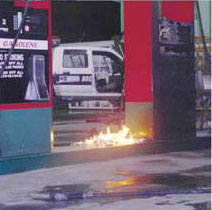
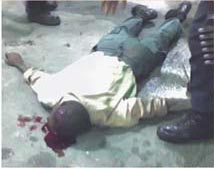
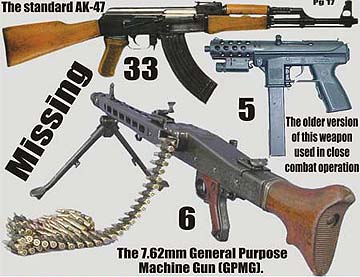
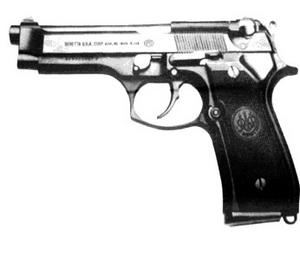
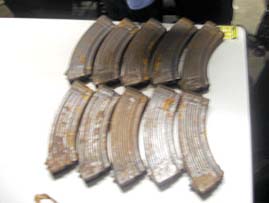
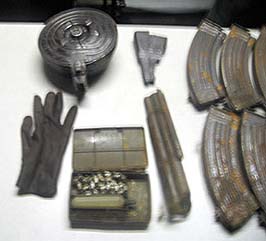
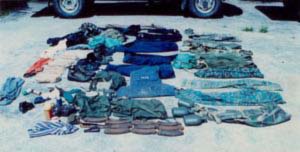
 |
©
2001 Guyanaundersiege.com |